
Blood cancer, also known as hematologic cancer, affects the blood, bone marrow, lymph, and lymphatic system. It includes a range of cancers, such as leukemia, lymphoma, and myeloma. A common question among patients diagnosed with blood cancer is, “Can blood cancer be cured?” While advancements in cancer treatments have significantly improved survival rates, the answer to this question varies depending on the type, stage, and overall health of the patient. In this blog, we will dive deep into the facts about blood cancer treatment, explore the possibility of a cure, and discuss treatment options, with insights from Dr. Vijay Anand Reddy, one of the Best oncologists in India.
What Is Blood Cancer?
Blood cancer refers to any cancer that starts in the blood-forming tissue or in the cells of the immune system. The three main types of blood cancer include:
- Leukemia: Cancer of the bone marrow and blood, leading to the rapid production of abnormal white blood cells.
- Lymphoma: Cancer of the lymphatic system, affecting the lymph nodes and spleen.
- Myeloma: Cancer of plasma cells in the bone marrow, which disrupts the production of blood cells.
Blood cancer can cause a range of symptoms, from fatigue and fever to swollen lymph nodes and frequent infections. Early detection and treatment are essential for improving outcomes.
Can Blood Cancer Be Cured?
The big question many patients and their families have is whether blood cancer can be cured. The answer to this depends on several factors, including the type of blood cancer, how early it’s diagnosed, and how well the patient responds to treatment.
1. Leukemia: Can It Be Cured?
Leukemia is a group of cancers that affects the blood and bone marrow. It is one of the most aggressive types of blood cancer, but it can often be treated effectively with chemotherapy and other treatments. The possibility of curing leukemia largely depends on the type of leukemia:
- Acute Leukemia: This form progresses quickly, but treatment can result in remission. With proper treatment, some patients can be cured.
- Chronic Leukemia: Chronic forms progress more slowly and may require lifelong management rather than a cure. However, treatment can help control the disease for years.
For patients with leukemia, Dr. Vijay Anand Reddy, one of the Best Oncologist in India, emphasizes the importance of early detection and personalized treatment plans. Advances in treatments such as targeted therapy, stem cell transplants, and immunotherapy have greatly improved outcomes for leukemia patients, making the possibility of a cure more achievable.
2. Lymphoma: What Are the Chances of a Cure?
Lymphoma is cancer of the lymphatic system. It includes Hodgkin lymphoma and non-Hodgkin lymphoma. The prognosis for lymphoma patients varies, but many patients with lymphoma can achieve a complete cure, particularly if the cancer is diagnosed in its early stages.
- Hodgkin lymphoma: Hodgkin lymphoma has a high cure rate, especially in early stages, with treatments like chemotherapy, radiation therapy, and stem cell transplants offering good outcomes.
- Non-Hodgkin lymphoma: The prognosis for non-Hodgkin lymphoma varies widely. Some types are aggressive and harder to treat, while others are indolent and can be managed over many years. Treatment typically involves chemotherapy, immunotherapy, and sometimes stem cell transplants.
Dr. Vijay Anand Reddy highlights that immunotherapy and CAR T-cell therapy, which boost the immune system to fight cancer, have shown promising results in treating certain types of lymphoma, increasing the chances of curing this form of blood cancer.
3. Myeloma: Can It Be Cured?
Myeloma is a cancer of the plasma cells in the bone marrow. It is typically considered a chronic disease that can be managed but not cured completely. However, recent advances in myeloma treatments have significantly improved the quality of life for patients.
Patients with myeloma often undergo chemotherapy, stem cell transplants, and medications like proteasome inhibitors and immunomodulatory drugs. Although myeloma may not always be completely curable, it is treatable, and many patients experience long periods of remission.
Dr. Vijay Anand Reddy points out that targeted therapies and immunotherapy are increasing the likelihood of achieving long-term remission in myeloma patients, improving both survival rates and quality of life.
Treatment Options for Blood Cancer
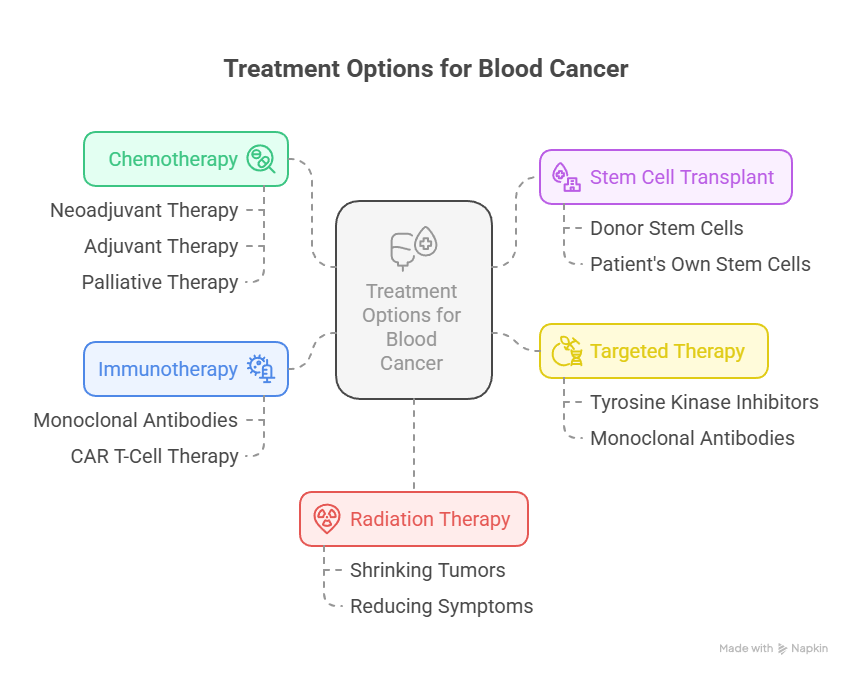
Whether blood cancer can be cured depends heavily on the specific treatment regimen the patient undergoes. The following are common treatment options for blood cancers:
1. Chemotherapy
Chemotherapy uses powerful drugs to kill or inhibit the growth of cancer cells. For many types of blood cancer, chemotherapy is the cornerstone of treatment. It is often used in combination with other treatments and is typically administered in cycles.
Chemotherapy may be used as:
- Neoadjuvant therapy: Before other treatments like surgery, to shrink tumors.
- Adjuvant therapy: After surgery or other treatments, to kill remaining cancer cells.
- Palliative therapy: To control symptoms in advanced cases.
2. Stem Cell Transplant (Bone Marrow Transplant)
For certain types of blood cancer, particularly leukemia and lymphoma, a stem cell transplant (also known as a bone marrow transplant) can be a potential cure. This procedure replaces damaged bone marrow with healthy stem cells, either from a donor or the patient’s own body, to regenerate new, healthy blood cells.
Stem cell transplants are most effective for aggressive cancers or when chemotherapy has failed. The procedure can be a life-saving option for some blood cancer patients, offering the possibility of remission.
3. Targeted Therapy
Targeted therapies are newer, more specific treatments that focus on the molecules involved in the growth and spread of cancer cells. They work by blocking or modifying the growth of cancer cells without harming normal cells. Targeted therapies are often used in combination with chemotherapy or immunotherapy to improve outcomes.
In blood cancers, drugs like Tyrosine kinase inhibitors and Monoclonal antibodies are examples of targeted therapies that have shown success in treating leukemia and lymphoma.
4. Immunotherapy
Immunotherapy is a treatment that uses the body’s immune system to fight cancer. For certain blood cancers, particularly lymphoma, immunotherapy has shown promising results. It involves using substances like monoclonal antibodies or engineered immune cells (CAR T-cell therapy) to target and destroy cancer cells.
Immunotherapy can be used alone or in combination with other treatments, offering patients better survival rates and fewer side effects than traditional therapies.
5. Radiation Therapy
In some cases, radiation therapy is used to treat blood cancer, particularly to target tumors in localized areas. Radiation can be used to shrink tumors or reduce symptoms in cancers like lymphoma. However, it is typically used as an adjunct to other therapies rather than as a primary treatment.
Bladder Cancer Treatment in Hyderabad
While blood cancer treatment options are diverse and increasingly effective, it’s important to note that bladder cancer treatment in Hyderabad has also advanced significantly in recent years. Similar to blood cancer, bladder cancer is treated with a combination of surgery, chemotherapy, immunotherapy, and radiation, depending on the cancer’s stage and type.
For patients with blood cancer who may also have other types of cancers, such as bladder cancer, Dr. Vijay Anand Reddy and his team at the clinic can help develop a comprehensive treatment plan that addresses all conditions simultaneously.
Prognosis and Survival Rates
Can blood cancer be cured? The prognosis for blood cancer patients depends largely on the type of cancer, the stage at diagnosis, and the patient’s overall health. With early detection and effective treatment, many patients achieve remission or long-term survival.
- Leukemia: The survival rate for leukemia depends on the type of leukemia. Acute leukemia has a lower survival rate, but it can still be treated effectively with chemotherapy. Chronic leukemia can be managed for many years.
- Lymphoma: With effective chemotherapy and immunotherapy, many patients with lymphoma go into remission, especially when diagnosed early.
- Myeloma: Although myeloma is considered incurable, modern therapies have significantly extended the life expectancy of patients, allowing many to live for years in remission.
Dr. Vijay Anand Reddy stresses that personalized care and early intervention are essential for improving survival rates in blood cancer patients. His expertise in treating various cancers, combined with advanced medical technologies, allows for more effective management of blood cancer.
Conclusion: Can Blood Cancer Be Cured?
In conclusion, the answer to “Can blood cancer be cured?” depends on various factors, including the type of blood cancer, how early it is detected, and how the patient responds to treatment. For certain types of blood cancer, such as leukemia and lymphoma, a cure is possible with early detection and the right treatment plan. However, even if a complete cure isn’t always achievable, advancements in treatment options, such as stem cell transplants, targeted therapy, and immunotherapy, have greatly improved the quality of life and survival rates for blood cancer patients. For expert care and personalized treatment options, consult Dr. Vijay Anand Reddy, one of the Best Oncologists in India.
