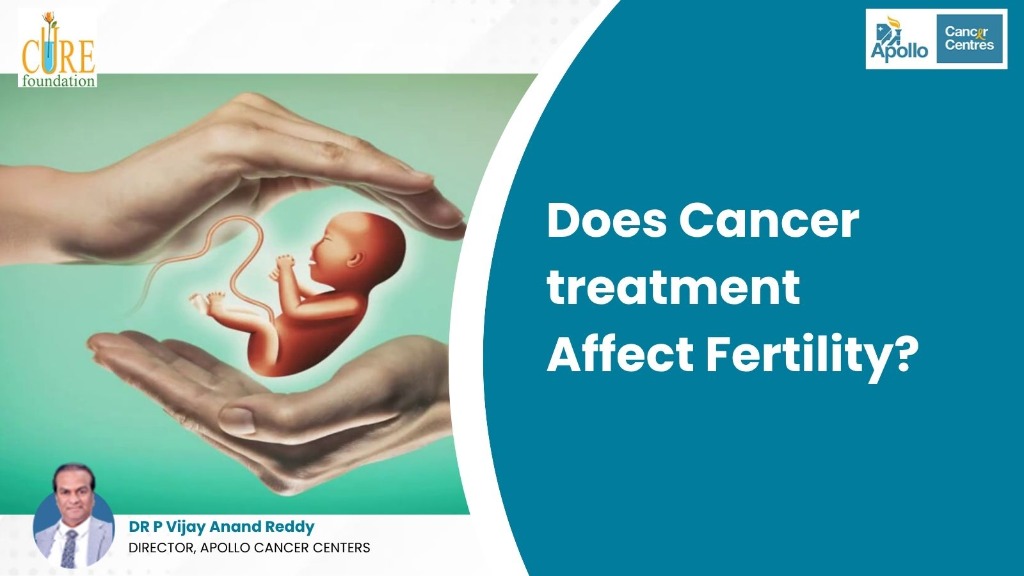
Does Cancer treatment Affect Fertility?
Dr. Vijay Anand Reddy
Oncologist
A cancer diagnosis is a life-altering event that brings immediate concerns about treatment, survival, and long-term health. For patients of reproductive age, however, another critical question frequently arises: does cancer treatment affect fertility? The desire to have children or build a family after surviving cancer is a powerful motivator. However, the therapies used to destroy cancer cells can have a significant, sometimes permanent, impact on reproductive organs and hormone production.
The short answer is yes, cancer treatments can affect fertility. However, the extent of the impact depends on several factors, including the type of cancer, the specific treatment plan, the dosage, the patient’s age, and their biological sex. Fortunately, under the guidance of leading medical experts, patients today have access to advanced options that can preserve their reproductive health. When seeking Cancer treatment in India, patients can consult renowned oncologists like Dr. Vijay Anand Redy to discuss these risks and explore personalized fertility preservation strategies before commencing their therapies.
How Different Cancer Treatments Impact Reproductive Health
To understand how cancer therapies affect the reproductive system, it is necessary to examine the primary modalities: chemotherapy, radiation therapy, surgery, and hormone therapy. Each affects fertility in distinct ways.
1. Chemotherapy and Fertility
Chemotherapy and fertility have a complex relationship. Chemotherapy drugs are designed to target and destroy rapidly dividing cells. Since cancer cells divide quickly, they are highly vulnerable to these drugs. However, other fast-growing cells in the body are also affected, including the reproductive cells in both men and women.
In women, chemotherapy can damage or destroy the immature eggs (oocytes) stored within the ovarian follicles. Unlike men, who continuously produce new sperm throughout their lives, women are born with a finite, non-replenishing supply of eggs. Once these eggs are damaged or destroyed by toxic chemotherapy agents, they cannot be replaced. This cell death can lead to a depleted ovarian reserve, irregular menstrual cycles, or a complete cessation of periods (amenorrhea). In some cases, chemotherapy triggers premature ovarian insufficiency (POI), which causes the ovaries to stop functioning normally before the age of 40, leading to early menopause. The risk of POI is heavily dependent on age; women over the age of 30 face a higher risk of permanent menopause because they have a naturally smaller ovarian reserve before starting treatment compared to younger patients.
In men, chemotherapy can damage the stem cells in the testicles that produce sperm. This can cause a temporary or permanent decrease in sperm count, or a complete absence of sperm in the semen (azoospermia). Depending on the drugs used and their dosages, sperm production may recover within a few years after completing treatment, but in some cases, infertility remains permanent.
2. Radiation Therapy and Fertility
Radiation therapy and fertility are also closely linked, particularly when radiation is directed at or near the pelvic region, abdomen, or lower spine. High-energy radiation beams destroy cancer cells by damaging their DNA, but they can also damage healthy tissues in the treatment path.
In female patients, direct radiation to the pelvis or abdomen can destroy the sensitive eggs in the ovaries, cause scarring in the fallopian tubes, or damage the lining and muscle walls of the uterus. Uterine damage is particularly challenging because it can permanently reduce blood flow to the organ, make the uterine walls less flexible and unable to expand, and significantly increase the risk of miscarriage, premature birth, or low birth weight during subsequent pregnancies. In male patients, radiation to the pelvis, bladder, or testicles can severely damage the Leydig and Sertoli cells responsible for producing sperm and testosterone. Even low doses of radiation scatter can cause temporary infertility, while higher doses directly targeting the pelvic region often result in permanent sterility.
Furthermore, radiation directed at the brain—specifically the pituitary gland or hypothalamus—can disrupt the hormonal signals that instruct the ovaries or testicles to produce eggs or sperm, leading to infertility even if the reproductive organs themselves were not irradiated.
3. Surgical Interventions
Surgical treatments for pelvic, abdominal, or gynecological cancers can directly impact fertility by removing or altering vital reproductive organs. In women, surgeries such as a hysterectomy (removal of the uterus) or a bilateral oophorectomy (removal of both ovaries) result in immediate and permanent infertility, as the body can no longer carry a pregnancy or produce eggs. Even conservative surgeries like a trachelectomy (removal of the cervix) can significantly increase the risk of preterm labor. In men, surgeries for prostate, bladder, colorectal, or testicular cancer may require the removal of the testicles, prostate gland, or seminal vesicles, halting semen and sperm production. Additionally, delicate surgeries in the pelvic cavity run the risk of damaging surrounding nerves. This nerve damage can lead to permanent erectile dysfunction or retrograde ejaculation, a condition where semen enters the bladder instead of exiting the penis during ejaculation.
4. Hormone and Targeted Therapies
Hormone therapies, commonly used for hormone receptor-positive breast or prostate cancers, work by blocking or lowering the body's natural hormones that fuel cancer growth. In women, these treatments (such as tamoxifen or ovarian suppression drugs) can cause temporary infertility by halting ovulation. In men, hormone therapy can lower testosterone levels, reducing libido and sperm production. Targeted therapies and immunotherapies are newer treatments, and while their long-term effects on fertility are still being studied, they can also disrupt reproductive function during active use.
Fertility Preservation Options Before Cancer Treatment
Because cancer treatments can pose a significant risk to future reproductive capacity, it is vital to discuss fertility preservation options with your oncology team before starting therapy. Preserving fertility is most successful when planned and executed prior to the first dose of chemotherapy or radiation. Several options exist for both men and women:
Options for Female Patients
- Egg Freezing (Oocyte Cryopreservation): This method involves stimulating the ovaries with hormones to produce multiple mature eggs. These eggs are then surgically retrieved and frozen for future fertilization. **Egg freezing** is an excellent option for women who do not have a partner or do not wish to use donor sperm.
- Embryo Freezing (Embryo Cryopreservation): Similar to egg freezing, this process involves stimulating the ovaries and retrieving mature eggs. However, the eggs are immediately fertilized in a laboratory with sperm from a partner or donor using in vitro fertilization (IVF). The resulting embryos are then frozen and stored. Embryo freezing has a high success rate and is one of the most established preservation methods.
- Ovarian Tissue Freezing: This is a newer technique where a part of an ovary is surgically removed and frozen. Later, after cancer treatment is complete, the tissue can be transplanted back into the body to restore ovarian function and fertility. This is often the only option available for prepubertal girls who cannot undergo ovarian stimulation.
- Ovarian Transposition (Oophoropexy): If pelvic radiation is required, a surgeon can temporarily relocate the ovaries to a higher position in the abdomen, out of the direct path of the radiation beam, to minimize exposure and damage.
Options for Male Patients
- Sperm Banking (Sperm Cryopreservation): This is the simplest and most effective fertility preservation method for men. It involves collecting and freezing semen samples before treatment begins. The frozen sperm can be stored indefinitely and used later in fertility treatments like intrauterine insemination (IUI) or IVF. **Sperm banking** is highly reliable and widely available.
- Testicular Tissue Freezing: For prepubertal boys who cannot produce sperm samples, testicular tissue containing sperm-producing stem cells can be surgically removed and frozen. This method is still considered experimental, but it holds promise for the future.
- Radiation Shielding: Placing a lead shield over the scrotum during pelvic radiation therapy can help protect the testicles from scatter radiation.
Planning and Timing: The Key to Success
The timing of fertility preservation is critical. In many cases, patients are anxious to start cancer treatment immediately after diagnosis. However, undergoing fertility treatments like egg or embryo freezing typically requires 2 to 3 weeks of hormonal stimulation. Oncologists must evaluate whether delaying cancer treatment for this short period is safe. For many early-stage cancers, this brief window is entirely feasible and does not impact treatment success.
According to patient resources published by Cancer.Net, the educational portal of the American Society of Clinical Oncology (ASCO), discussing fertility concerns early in the process—ideally at the time of diagnosis—is crucial. Open communication between medical oncologists, reproductive endocrinologists, and patients ensures that a comprehensive plan can be designed without compromising the primary goal of cancer eradication. Even in cases where immediate treatment is necessary, certain emergency preservation protocols or post-treatment options may still be considered.
World-Class Cancer Care and Support in India
For patients navigating these challenging decisions, finding a supportive and advanced medical environment is essential. Choosing Cancer treatment in India provides access to world-class oncology centers that integrate comprehensive reproductive medicine into their care models. Leading cancer centers in India utilize multidisciplinary teams that address not only the elimination of cancer but also the long-term quality of life of survivors, including their dreams of starting a family.
Specialists such as Dr. Vijay Anand Redy prioritize patient-centered care, ensuring that fertility preservation is discussed openly with every eligible patient before treatment begins. With state-of-the-art laboratory facilities, experienced embryologists, and personalized treatment protocols, patients can proceed with their cancer treatments knowing that their future family-building goals have been prioritized and safeguarded.
Conclusion
In conclusion, while cancer treatments can have a significant and sometimes permanent impact on reproductive health, infertility is no longer an inevitable consequence of survival. Thanks to modern advancements in reproductive technology and fertility preservation, cancer survivors have a high chance of having biological children after recovery. The key lies in early awareness, open discussion with your oncologist, and taking proactive steps before treatment begins. Understanding your options empowers you to look forward to a healthy, full life after cancer.
Frequently Asked Questions
Does chemotherapy cause permanent infertility?
How long after cancer treatment can you try to conceive?
Can children undergo fertility preservation?
What is the success rate of pregnancy after cancer treatment in India?
Is fertility preservation expensive in India?
Does having a baby after cancer increase the risk of recurrence?
Dr. Vijay Anand Reddy
Dr. Vijay Anand Reddy is a renowned oncologist with over 34 years of experience in cancer treatment. He is committed to providing world-class cancer care and spreading awareness about early detection and prevention.
View Full ProfileRelated Articles
Discover more insights about cancer awareness, treatment options, and patient stories.

Does Chemotherapy lower Immune system?

How many Stages of Pancreatic Cancer are there?

Does Chemotherapy Work for Breast Cancer? {Real Facts}
How to Cure Throat Cancer at Home?
Which Ray is Used in Cancer Treatment? {A 2026 Guide}