
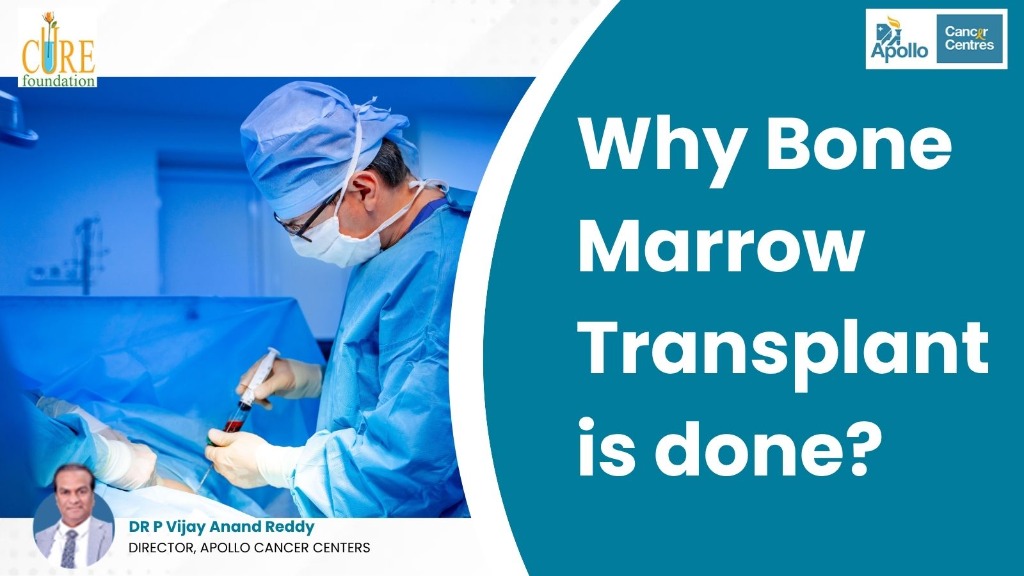
Why Bone Marrow Transplant is done?
Dr. Vijay Anand Reddy
Consultant Oncologist • AI-Assisted Educational Resource
Medical Disclaimer: This article is AI-assisted and intended for general informational purposes only. It does not replace professional medical advice, diagnosis, or treatment. Please consult a qualified healthcare specialist for advice specific to your condition.
Quick Answer: Why is a Bone Marrow Transplant Done?
A bone marrow transplant is done to replace damaged, diseased, or destroyed blood-forming stem cells with healthy stem cells. It restores the body's natural capacity to generate life-sustaining red blood cells, infection-fighting white blood cells, and clotting platelets. Doctors perform this procedure to cure aggressive blood cancers (leukemia, lymphoma, multiple myeloma), to rescue bone marrow wiped out by high-dose chemotherapy, to resolve marrow failure disorders such as aplastic anemia, and to correct inherited genetic conditions like thalassemia major and sickle cell disease.
Introduction: Understanding the Body's Blood Factory
Every second, your body produces millions of new blood cells to circulate oxygen, defend against infections, and heal wounds. This continuous production happens inside the spongy tissue found at the center of your bones, known as bone marrow. Inside this marrow reside blood-forming stem cells, which serve as the master seeds for your red blood cells, white blood cells, and platelets.
When this biological factory functions smoothly, you enjoy vitality, energy, and robust immunity. However, when cancerous mutations, immune system malfunctions, or inherited genetic defects damage the marrow, it stops creating healthy blood cells. In such critical circumstances, doctors recommend a specialized therapy termed hematopoietic stem cell transplantation.
Many patients and families ask why bone marrow transplant is done and what distinguishes it from routine medical therapies. For individuals exploring options for Bone Marrow Transplant in India or seeking expert oncology second opinions, consulting an experienced Oncologist in India provides clear diagnosis, accurate staging, and compassionate guidance through modern treatment pathways.
Facing a Blood Disorder or Oncology Diagnosis?
Consult Dr. Vijay Anand Reddy at Apollo Cancer Centres for expert oncology evaluation, second opinions, and personalized care planning.
Book Your Consultation Today →What Does Bone Marrow Do in Your Body?
To understand why bone marrow transplant is done, it helps to review the three crucial cell lines created by bone marrow stem cells:
- Red Blood Cells: Transport oxygen from your lungs to your brain, heart, and tissues. Without them, severe anemia and extreme exhaustion develop.
- White Blood Cells: Act as your immune defense against bacteria, viruses, and fungi. Low levels leave the body open to dangerous infections.
- Platelets: Form blood clots to stop bleeding from cuts and prevent spontaneous internal hemorrhages.
When illness impairs the bone marrow, an individual experiences persistent fatigue, frequent infections, and easy bruising. Replacing the damaged stem cells restores these vital functions.
Primary Medical Reasons: Why Bone Marrow Transplant is Done
Oncologists and hematologists recommend a transplant for four main therapeutic reasons:
1. Rescuing the Body from High-Dose Cancer Therapies
Certain aggressive cancers require very high doses of chemotherapy or radiation to achieve cure. While these treatments destroy resistant cancer cells, they also eradicate normal bone marrow. A stem cell transplant rescues the patient by restoring their blood-making capacity once cancer treatment finishes.
2. Replacing Diseased and Malignant Bone Marrow
In leukemias, the marrow itself produces defective white blood cells that crowd out healthy cells. A transplant completely clears out this cancerous factory and replaces it with healthy stem cells that produce normal blood lines.
3. Creating a Graft-Versus-Tumor Immune Effect
When stem cells come from a healthy donor, the new donor immune cells recognize any lingering cancer cells as foreign and destroy them. This beneficial response, known as the graft-versus-leukemia effect, protects against future cancer recurrence.
4. Curing Genetic and Bone Marrow Failure Disorders
In non-malignant conditions like aplastic anemia or thalassemia major, the bone marrow cannot produce healthy blood cells due to immune attack or inherited genetic faults. Transplanting healthy donor stem cells permanently resolves these chronic, life-threatening conditions.
Diseases Treated: When is Bone Marrow Transplant Done?
Knowing when is bone marrow transplant done depends on the specific disease, stage of remission, overall patient health, and donor availability. Key indications include:
A. Malignant Blood Cancers
- Acute Leukemias (AML & ALL): Fast-growing blood cancers where transplants are performed after first remission to prevent relapse.
- Hodgkin & Non-Hodgkin Lymphoma: Recommended for patients whose lymphoma returns after initial chemotherapy.
- Multiple Myeloma: Autologous transplantation provides deep, long-lasting remissions for plasma cell cancer.
- Myelodysplastic Syndromes (MDS): Pre-leukemic bone marrow failures with high risk of transformation.
B. Non-Cancerous Blood & Immune Conditions
- Severe Aplastic Anemia: The marrow shuts down; healthy donor cells restart blood generation.
- Thalassemia Major: A genetic defect causing severe lifelong anemia, curable through stem cell transplantation.
- Sickle Cell Disease: Abnormal red cells cause painful crises and organ damage; curable with a donor transplant.
- Severe Combined Immunodeficiency (SCID): A life-threatening infant immune disorder curable with prompt stem cell transfer.
For individuals exploring skeletal symptoms, understanding early bone cancer detection helps explain how imaging and biopsies differentiate bone tumors from systemic marrow illnesses.
Types of Bone Marrow Transplants: Autologous vs. Allogeneic
Transplants fall into two major categories based on who donates the stem cells:
1. Autologous Transplant (Self-Donation)
The patient donates their own stem cells before intensive chemotherapy begins. The cells are harvested, frozen, and stored. After chemotherapy wipes out cancer cells, the patient's cells are thawed and infused back. Because these are the patient's own cells, there is zero risk of graft rejection.
2. Allogeneic Transplant (From a Donor)
Stem cells are gathered from a compatible donor whose genetic markers (HLA typing) match the patient. Potential donors include:
- Matched Sibling Donor: Brothers or sisters who share matching HLA tissue types.
- Matched Unrelated Donor: A volunteer identified via worldwide bone marrow registries.
- Haploidentical Donor: A half-matched family member (parent, child, or sibling).
- Umbilical Cord Blood: Stem cells preserved from donated umbilical cords.
Transplant Types Compared: At a Glance
The table below summarizes clinical features and typical timelines across transplant options:
| Transplant Type | Cell Source | Primary Uses | GVHD Risk | Hospital Stay |
|---|---|---|---|---|
| Autologous | Patient's own stem cells | Myeloma, Relapsed Lymphoma | None (0%) | 2 to 3 weeks |
| Allogeneic Matched | HLA-matched sibling or unrelated donor | Leukemias, Aplastic Anemia, Thalassemia | Moderate | 3 to 5 weeks |
| Haploidentical | Half-matched parent, child, or sibling | High-risk leukemias without matched donors | Moderate to High | 4 to 6 weeks |
Step-by-Step Procedure: How is a Bone Marrow Transplant Done?
A common misconception is that bone marrow transplant how is it done involves major surgery. In practice, the infusion is painless and administered through an intravenous catheter. Knowing how is a bone marrow transplant done helps patients prepare with confidence:
1. Pre-Transplant Evaluation
Patients undergo comprehensive heart, lung, kidney, and liver tests along with viral screenings to confirm physical readiness for conditioning therapy.
2. Stem Cell Harvesting
Most donations use peripheral blood apheresis. Growth factor injections encourage stem cells to enter the bloodstream, where a specialized machine collects them without requiring surgical incisions.
3. Conditioning Regimen
Over several days, the patient receives chemotherapy and sometimes targeted radiation to eliminate remaining cancer cells, suppress immunity, and prepare bone marrow spaces for new cells.
4. The Transplant Infusion ("Day Zero")
The harvested stem cells are infused into the patient's bloodstream through a central venous line, just like a blood transfusion. The cells naturally travel to and settle inside the bone marrow cavities.
5. Engraftment and Early Recovery
Over the next 2 to 4 weeks, the new stem cells multiply and begin producing fresh blood cells. Patients remain in clean, protective isolation rooms until white blood cell counts reach safe levels.
The Role of Advanced Radiation in Modern Cancer Treatment
Total Body Irradiation (TBI) is often combined with chemotherapy during conditioning to eliminate cancer cells hiding in hard-to-reach sanctuary areas. Precision planning ensures maximum effectiveness while sparing delicate organs like the lungs and kidneys.
In broader cancer care, advanced techniques such as IMRT Treatment in India (Intensity Modulated Radiation Therapy) shape high-energy beams to match exact tumor contours. Learning about how advanced radiation works helps patients understand how modern radiation targets malignancies while protecting surrounding healthy tissues.
World-Class Oncology Guidance with Dr. Vijay Anand Reddy
Director of Apollo Cancer Centres, Hyderabad, with over 30 years of clinical leadership in oncology, precision radiation, and personalized patient therapies.
Schedule an Appointment →Recovery Milestones, Potential Risks & GVHD
Recovery after a bone marrow transplant takes patience. The immune system needs 6 to 12 months to regain its full protective strength.
- Infection Control: Because immunity is low initially, patients take preventive antimicrobial medications, maintain careful food hygiene, and practice diligent hand washing.
- Graft-Versus-Host Disease (GVHD): In allogeneic transplants, donor immune cells may sometimes attack the recipient's skin, gut, or liver. Doctors manage GVHD with immunosuppressive therapies, and mild cases often deliver helpful anti-cancer benefits.
- Insurance Planning: Reviewing details concerning cancer treatment insurance coverage ensures families understand coverage limits for inpatient hospitalization and post-transplant medications.
Conclusion: A Proven Lifeline for Complex Conditions
Ultimately, understanding why bone marrow transplant is done underscores its power as a life-saving medical milestone. By replacing malfunctioning or cancerous blood-forming factories with healthy stem cells, it offers a real opportunity for cure and renewed health across blood cancers, marrow failures, and genetic disorders.
With advances in donor matching, supportive medications, and precision oncology care, transplant outcomes are stronger and safer than ever. For comprehensive cancer care, second opinions, or personalized treatment consultations, reach out to Dr. Vijay Anand Reddy at Apollo Cancer Centres, India.
Frequently Asked Questions
Q1. Is a bone marrow transplant a surgical operation?
No. A bone marrow transplant is non-surgical. Stem cells are delivered intravenously through a central catheter into your bloodstream, similar to a blood transfusion. The cells naturally travel to and settle inside the bone marrow cavities.
Q2. Is donating bone marrow painful for the donor?
Most donations use peripheral blood apheresis, which is non-surgical and painless, resembling a plasma donation. When marrow is collected directly from the pelvic bone, general anesthesia prevents any pain, with donors experiencing only mild soreness for a few days. The donor's body replenishes stem cells within weeks.
Q3. How long do I need to stay in the hospital after a bone marrow transplant?
Hospital stays typically range between 2 to 5 weeks. Autologous transplant patients are usually discharged within 2 to 3 weeks once counts recover, while allogeneic recipients stay 3 to 5 weeks for engraftment monitoring.
Q4. What is the success rate of a bone marrow transplant?
Success rates depend on disease type and patient condition. Non-cancerous disorders like aplastic anemia and thalassemia in young patients achieve cure rates over 85% to 90%. Early-remission leukemias achieve 60% to 80% long-term survival with modern care.
Q5. Can older adults undergo a bone marrow transplant?
Yes. Reduced-intensity conditioning (RIC or mini-transplants) uses lower chemotherapy doses, allowing fit individuals in their 60s and early 70s to undergo successful transplants.
Q6. What is graft-versus-host disease (GVHD)?
GVHD occurs when donor immune cells attack the recipient's skin, liver, or digestive tract. Doctors use preventive medications to control it, and mild cases often provide protective anti-cancer benefits.
Q7. How long does full immune recovery take?
While red blood cells and platelets recover within weeks, complete immune system maturity requires 6 to 12 months for autologous transplants and 1 to 2 years for allogeneic procedures.
Q8. Whom should I consult for bone marrow transplant evaluation in India?
Patients should consult experienced oncologists and dedicated transplant hematology teams. Dr. Vijay Anand Reddy at Apollo Cancer Centres, India, provides expert oncology evaluations, diagnostic staging, and treatment planning.
Frequently Asked Questions
Is a bone marrow transplant a surgical operation?
Is donating bone marrow painful for the donor?
How long do I need to stay in the hospital after a bone marrow transplant?
What is the success rate of a bone marrow transplant?
Can older adults undergo a bone marrow transplant?
What is graft-versus-host disease (GVHD)?
How long does full immune recovery take?
Whom should I consult for bone marrow transplant evaluation in India?
Dr. Vijay Anand Reddy
Dr. Vijay Anand Reddy is a renowned oncologist with over 34 years of experience in cancer treatment. He is committed to providing world-class cancer care and spreading awareness about early detection and prevention.
View Full ProfileRelated Articles
Discover more insights about cancer awareness, treatment options, and patient stories.

Does Oral Cancer Spread? {Quick Guide}

Can a Blood Test Detect Prostate Cancer?

Can Teenagers get Breast Cancer? {2026 Guide}

How Long Can You Live with Blood Cancer Without Treatment?

Is Chemotherapy Painful for Breast Cancer? {Real Facts}
