
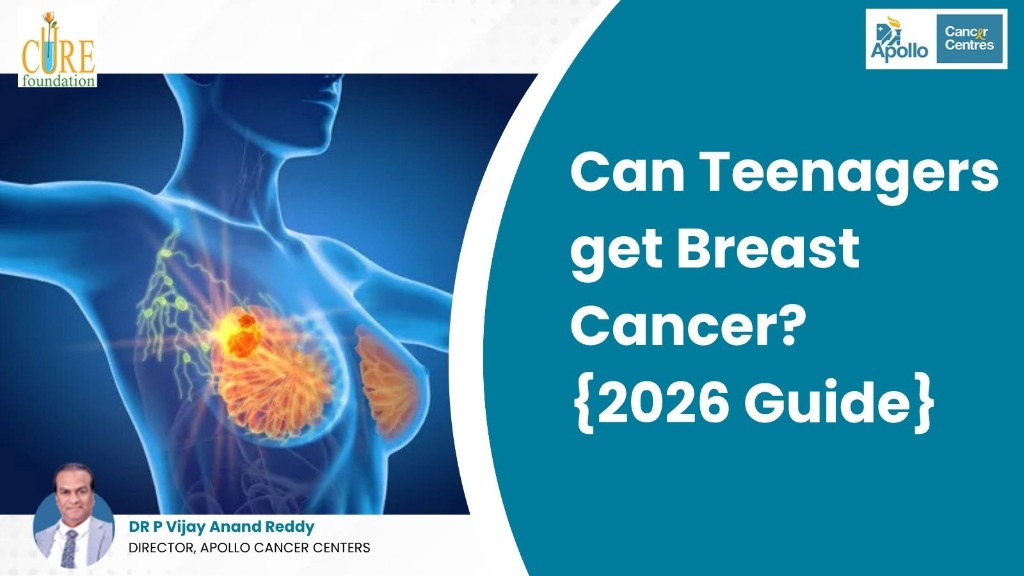
Can Teenagers get Breast Cancer? {2026 Guide}
Dr. Vijay Anand Reddy
Consultant Oncologist • AI-Assisted Educational Resource
Medical Disclaimer: This article is AI-assisted and intended for general informational purposes only. It does not replace professional medical advice, diagnosis, or treatment. Please consult a qualified healthcare specialist for advice specific to your condition.
Introduction
Breast cancer is a topic that dominates health headlines, raising general awareness but also causing significant anxiety among younger populations. Many young women and their parents frequently ask: Can Teenagers get Breast Cancer? During puberty, the female body undergoes rapid hormonal and physical changes, making any new sensation or lump in the breast tissue a source of immediate concern. Under the guidance of highly experienced specialists like Dr. Vijay Anand Reddy, patients receive comprehensive evaluations to understand their symptoms and explore advanced diagnostic paths. Having access to clear information is essential when assessing options for Breast Cancer Treatment in India.
While breast changes are a normal part of development, understanding when a change is typical and when it warrants professional medical attention is crucial. This blog provides a detailed, simple guide on breast health in teenagers, the symptoms of concern, and the diagnostic methods used.
Understanding Breast Cancer
Breast cancer is a malignancy that starts in the cells of the breast. It occurs when these cells undergo genetic mutations that cause them to multiply uncontrollably, forming a mass of tissue called a tumor. If left untreated, these cancerous cells can invade surrounding tissues and spread through the lymphatic system or bloodstream to other parts of the body.
For many teenagers experiencing changes in their bodies, a primary concern is: can breast cancer happen in teenage years? To understand this, it helps to look at how breast tissue develops. During puberty, the breasts grow under the influence of hormones like estrogen and progesterone. This growth involves the development of milk ducts, lobules, and fatty tissue. Because the tissue is actively changing, it is common to experience temporary tenderness, swelling, or even small lumps. In almost all cases, these changes are benign (non-cancerous) reactions to normal hormonal cycles rather than signs of malignancy.
Can Teenagers Actually Get Breast Cancer?
To answer this directly: yes, a teenager get breast cancer in extremely rare instances, but it is exceptionally uncommon. Less than 0.1% of all diagnosed breast cancers occur in patients under the age of 20. Statistically, the risk for a teenager developing this malignancy is close to zero, with only a handful of cases reported globally each year.
When a teenager diagnosed with breast cancer is reported, it is usually linked to specific genetic syndromes or a history of high-dose radiation therapy during childhood. The vast majority of breast lumps found in young girls are completely benign. The most common type of adolescent breast lump is a fibroadenoma—a benign tumor made of fibrous and glandular tissue that feels like a smooth, firm, rubbery marble under the skin. Other common causes of lumps include simple cysts, which are fluid-filled sacs that can change in size and tenderness during the menstrual cycle.
Signs and Symptoms of Breast Cancer in Teens
Even though the risk is extremely low, teenagers and their parents should be aware of the physical changes that require evaluation. The primary teenage breast cancer symptoms and general signs of concern include:
- A New, Persistent Lump: A lump that feels hard, has irregular edges, and does not move easily under the skin. Unlike hormonal lumps, it does not disappear or shrink after the menstrual cycle.
- Breast Swelling or Asymmetry: Sudden swelling of all or a portion of one breast that is not related to normal developmental changes.
- Skin Changes: Dimpling, puckering, or redness of the skin over the breast, which can sometimes resemble the texture of an orange peel (peau d'orange).
- Nipple Retraction or Changes: The nipple suddenly turning inward or shifting in position, or the skin around the nipple becoming scaly, red, or thickened.
- Nipple Discharge: A spontaneous fluid discharge from the nipple, especially if it is clear or blood-tinged and occurs without squeezing.
- Persistent Pain: Constant pain in a specific area of the breast that is not linked to the menstrual cycle (though pain is rarely a primary symptom of cancer).
If you observe any of these signs of breast cancer in teenager, it is essential to consult a healthcare provider for a clinical exam.
Risk Factors for Breast Cancer in Teens
In the rare event that breast cancer occurs in youth, it is usually not random. Specific risk factors increase the likelihood of developing the disease at an early age:
- Genetic Mutations: Inherited mutations in genes like BRCA1, BRCA2, or TP53 (which causes Li-Fraumeni syndrome) significantly raise the risk of developing breast cancer early in life.
- Childhood Radiation Therapy: Teens who received radiation therapy to the chest area during childhood, particularly for cancers like Hodgkin lymphoma, have a significantly higher risk of developing breast cancer later.
- Strong Family History: Having multiple close relatives (mother, sister, grandmother) diagnosed with breast cancer at an early age increases a teen's risk profile.
For most teenagers, typical risk factors associated with adults (such as age, hormonal therapies, or lifestyle habits accumulated over decades) do not apply.
Can I Reduce My Risk of Breast Cancer?
While genetic factors and medical history cannot be changed, adopting healthy habits during the teenage years can help lower overall cancer risk and support long-term breast health:
- Maintain a Balanced Diet: Eat plenty of fruits, vegetables, whole grains, and lean proteins, which are rich in antioxidants and support immune health.
- Engage in Regular Exercise: Aim for at least 30 to 60 minutes of physical activity daily. Regular exercise helps regulate hormone levels and maintains a healthy body weight.
- Avoid Tobacco and Alcohol: Smoking and alcohol consumption are linked to a higher risk of multiple cancers. Establishing a smoke-free and alcohol-free lifestyle in youth is a major protective step.
- Practice Breast Self-Awareness: Instead of performing rigid self-exams that cause anxiety, teens should practice "breast awareness." This means knowing how their breasts normally look and feel so they can easily spot any changes.
Diagnosis of Breast Cancer in Teenage
If a teenager presents with a suspicious breast lump, the diagnostic process differs slightly from that of older adults.
First, a doctor will perform a clinical breast examination to feel the size and shape of the lump. If further testing is needed, an ultrasound is the primary imaging test used for young women (under 30). This is because young breast tissue is naturally dense, making mammograms less effective and exposing them to radiation unnecessarily. An ultrasound uses sound waves to create clear images of the breast tissue, helping determine if the lump is a fluid-filled cyst or a solid mass.
If the ultrasound reveals a complex or solid mass that looks suspicious, a magnetic resonance imaging (MRI) scan or a needle biopsy may be recommended. During a biopsy, a small sample of cells is removed from the mass and analyzed in a lab to confirm if it is benign or malignant.
Are Some Teens More at Risk Than Others?
Yes, the risk is not uniform. The majority of teenagers have a near-zero risk of breast cancer. However, teens with inherited genetic mutations or a history of chest radiation are considered high-risk. These individuals require close clinical monitoring, often beginning at an earlier age than the general population. For average-risk teens with no family history of early-onset cancer, routine clinical screening is not recommended.
When Should You See a Specialist?
It is normal for breasts to feel sore or slightly lumpy during puberty. However, you should consult a doctor if you experience:
- A lump that does not go away after one or two menstrual cycles.
- A lump that grows rapidly or becomes hard and fixed.
- Spontaneous nipple discharge (especially clear or bloody).
- Skin changes like redness, puckering, or dimpling.
Consulting a dedicated specialist like Dr. Vijay Anand Reddy ensures you receive a precise assessment, helping rule out serious conditions while providing necessary reassurance and support.
Conclusion
In conclusion, while it is natural to feel concerned about breast changes, breast cancer in teenagers is incredibly rare. The vast majority of lumps and changes experienced during puberty are benign, representing normal responses to developmental hormones. Emphasizing breast awareness and a healthy lifestyle is the best approach.
If you do notice persistent abnormalities, seek clinical advice. Reaching out to an experienced specialist ensures a precise diagnosis and provides access to advanced care systems, including established programs for Breast Cancer Treatment in India.
Frequently Asked Questions (FAQ):
Frequently Asked Questions
Can teenagers get breast cancer?
What are the signs of breast cancer in teenager?
What is the most common cause of a breast lump in a teenager?
How to detect breast cancer in teenager vs. adults?
Can breast cancer happen in teenage boys?
Can radiation for childhood cancer cause breast cancer later?
Dr. Vijay Anand Reddy
Dr. Vijay Anand Reddy is a renowned oncologist with over 34 years of experience in cancer treatment. He is committed to providing world-class cancer care and spreading awareness about early detection and prevention.
View Full ProfileRelated Articles
Discover more insights about cancer awareness, treatment options, and patient stories.

Does Oral Cancer Spread? {Quick Guide}

Can a Blood Test Detect Prostate Cancer?

Can Teenagers get Breast Cancer? {2026 Guide}

How Long Can You Live with Blood Cancer Without Treatment?

Is Chemotherapy Painful for Breast Cancer? {Real Facts}
