
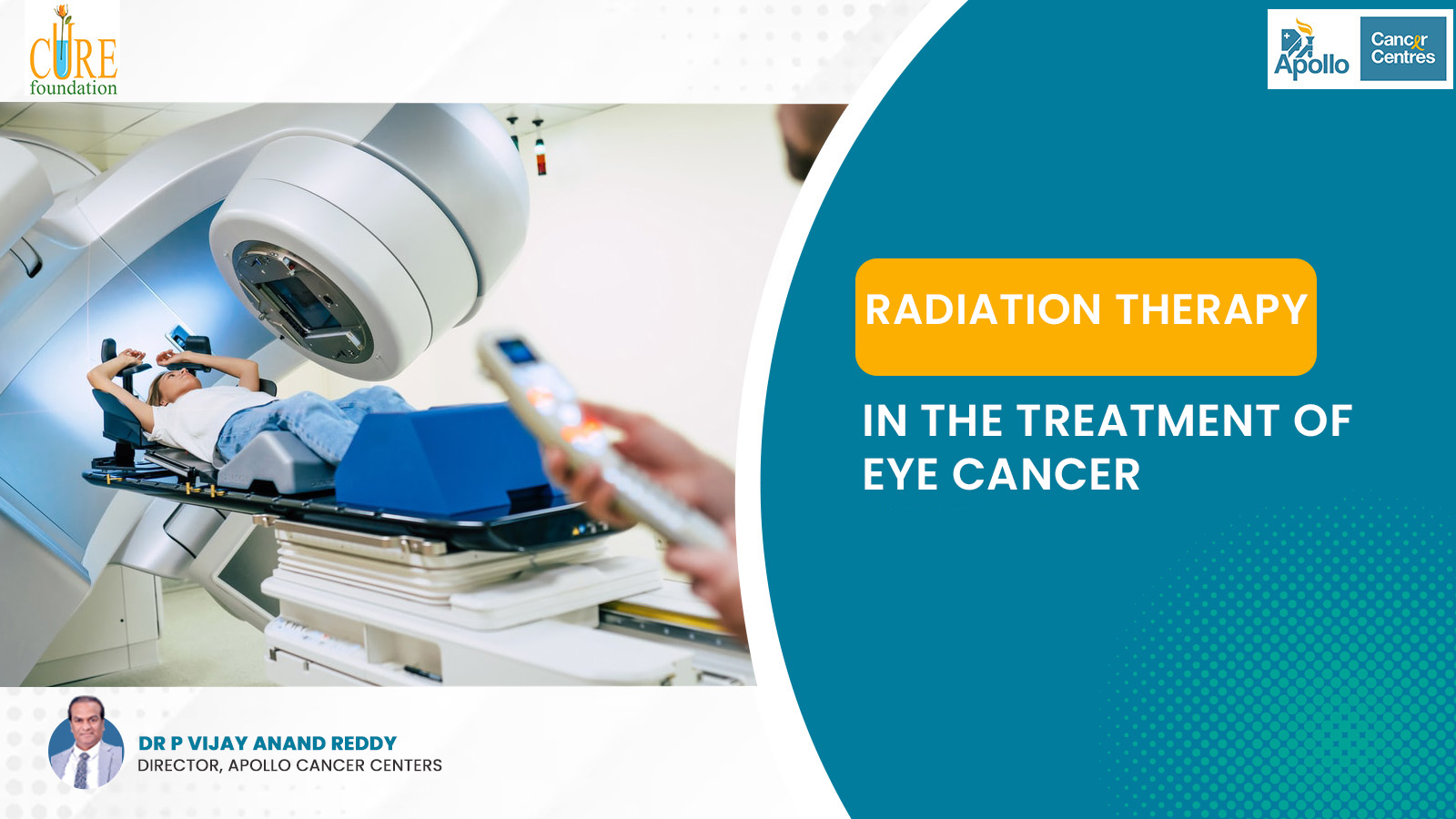
Radiation Therapy in the Treatment of Eye Cancer
Dr. Vijay Anand Reddy
Consultant Oncologist • AI-Assisted Educational Resource
Medical Disclaimer: This article is AI-assisted and intended for general informational purposes only. It does not replace professional medical advice, diagnosis, or treatment. Please consult a qualified healthcare specialist for advice specific to your condition.
Eye cancer, though relatively rare, poses significant challenges in treatment. Radiation therapy has emerged as a pivotal modality in managing this condition, offering hope and improved outcomes for patients. In India, advancements in radiation therapy from the Best Oncologist in Hyderabad have greatly enhanced the precision and effectiveness of eye cancer treatment.
Understanding Radiation Therapy for Eye Cancer:
Radiation therapy uses high-energy rays or particles to destroy cancer cells. For eye cancer, it's particularly valuable because it can target tumors within the eye without the need for invasive surgery, thereby preserving vision as much as possible.
Types of Radiation Therapy Used in Eye Cancer Treatment:
External Beam Radiation Therapy (EBRT): This is the most common form of radiation therapy for eye cancer. It involves targeting the tumor with radiation beams from outside the body. Technological advancements have made EBRT more precise, reducing damage to surrounding healthy tissue.
Brachytherapy: Particularly effective for treating melanoma of the eye, brachytherapy involves placing a small radioactive disc, known as a plaque, directly on the eye, near the tumor. This localized form of radiation therapy is widely used in India and has shown excellent results in preserving vision.
Proton Beam Therapy: A newer form of radiation therapy, proton beam therapy, offers even greater precision by using protons to target the tumor. This approach is especially beneficial for treating larger eye tumors and is increasingly becoming available in specialized centers for Eye Cancer Treatment in India.
Advantages of Radiation Therapy in Eye Cancer Treatment:
- Vision Preservation: One of the primary goals of radiation therapy in eye cancer treatment is to preserve as much vision as possible.
- Non-Invasive: Radiation therapy is less invasive than traditional surgery, making it a preferred option for many patients.
- Targeted Treatment: Advances in radiation technology allow for the treatment to be highly targeted, minimizing damage to surrounding healthy tissues.
The Role of Multidisciplinary Care:
Eye Cancer treatment in India often involves a multidisciplinary team approach. This team includes oncologists, ophthalmologists, radiation therapists, and other specialists. They work together to determine the best course of radiation therapy, taking into account the type, size, and location of the tumor, as well as the patient's overall health and vision needs.
Challenges and Future Directions:
While radiation therapy is a cornerstone in the treatment of eye cancer, it's not without its challenges. Side effects can include inflammation, dry eye, or, in rare cases, loss of vision. Ongoing research in India is focused on further refining radiation techniques to minimize these side effects and improve outcomes for patients.
Conclusion
In conclusion, radiation therapy plays a critical role in the management of eye cancer, offering an effective, vision-sparing treatment option. With continuous advancements in radiation technology, eye cancer treatment in India is poised to provide even better outcomes for patients, emphasizing a balance between effective cancer control and preservation of vision.
Dr. Vijay Anand Reddy
Dr. Vijay Anand Reddy is a renowned oncologist with over 34 years of experience in cancer treatment. He is committed to providing world-class cancer care and spreading awareness about early detection and prevention.
View Full ProfileRelated Articles
Discover more insights about cancer awareness, treatment options, and patient stories.

Does Oral Cancer Spread? {Quick Guide}

Can a Blood Test Detect Prostate Cancer?

Can Teenagers get Breast Cancer? {2026 Guide}

How Long Can You Live with Blood Cancer Without Treatment?

Is Chemotherapy Painful for Breast Cancer? {Real Facts}
