
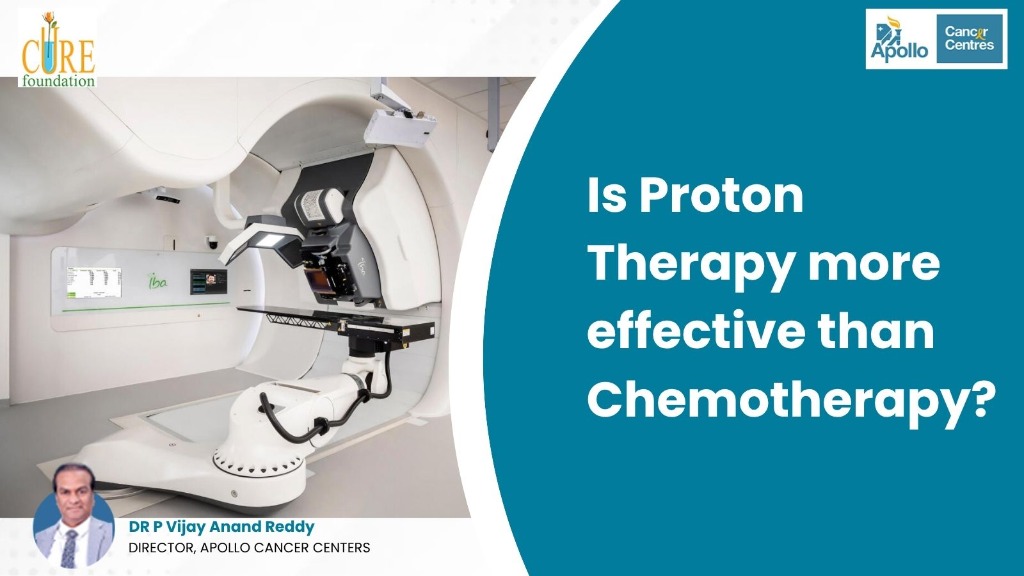
Is Proton Therapy more effective than Chemotherapy?
Dr. Vijay Anand Reddy
Consultant Oncologist • AI-Assisted Educational Resource
Medical Disclaimer: This article is AI-assisted and intended for general informational purposes only. It does not replace professional medical advice, diagnosis, or treatment. Please consult a qualified healthcare specialist for advice specific to your condition.
📌 Quick Summary: Proton Therapy vs Chemotherapy
- Fundamental Difference: Proton Therapy is a highly localized, precision radiation therapy for solid tumors, while Chemotherapy is a body-wide (systemic) drug treatment.
- Precision Advantage: Protons stop abruptly inside the tumor target (the Bragg Peak effect), depositing zero exit radiation into healthy surrounding organs.
- Systemic Protection: Chemotherapy circulates throughout the entire bloodstream, making it essential for blood cancers (leukemia/lymphoma) and metastatic (widespread) cancers.
- Best Approach: Neither is universally "better"; oncologists frequently combine both modalities for maximum curative efficacy.
Understanding the Core Differences: Proton Therapy vs Chemotherapy
When patients and families navigate a cancer diagnosis, one of the most critical decisions involves evaluating modern treatment options. Comparing Proton Therapy vs Chemotherapy requires understanding that these two modalities fight cancer through fundamentally different biological and physical mechanisms.
For scientific reference on subatomic particle beam mechanics, refer to the authoritative overview on Proton Beam Therapy.
What is Proton Beam Therapy?
Proton Therapy is one of the most technologically advanced forms of external beam radiation available in modern oncology. Unlike traditional X-ray radiation (which uses photons that pass entirely through the body), proton machines accelerate heavy, positively charged subatomic particles (protons) to near light speeds using a cyclotron or synchrotron.
- The Bragg Peak Advantage: Protons possess a unique physical phenomenon known as the Bragg Peak. Protons can be calibrated to deposit their maximum radiation dose strictly at the exact depth of the tumor and stop abruptly.
- Zero Exit Dose: Beyond the targeted tumor boundary, no radiation passes through healthy surrounding organs, significantly reducing acute side effects and long-term tissue damage.
What is Chemotherapy?
Chemotherapy is a systemic cancer treatment that utilizes powerful anti-cancer chemical drugs. Administered intravenously (IV) or orally, chemotherapy agents travel through the entire bloodstream to target and destroy fast-dividing cancer cells wherever they reside in the body.
Direct Comparison: Proton Therapy vs Chemotherapy
The table below summarizes the operational and biological differences between these two vital cancer therapies:
| Comparison Factor | Proton Beam Therapy | Chemotherapy |
|---|---|---|
| Treatment Scope | Highly localized (Precision targets specific solid tumors) | Systemic (Circulates body-wide via bloodstream) |
| Primary Mechanism | Subatomic proton particles causing DNA double-strand breaks | Cytotoxic chemical agents interrupting cellular division |
| Impact on Healthy Organs | Minimal (Zero exit radiation beyond tumor target boundary) | Affects healthy rapidly dividing cells (hair, gut, bone marrow) |
| Best Suited Cancers | Brain, spinal cord, head & neck, pediatric, prostate, eye tumors | Leukemia, Lymphoma, metastatic or widespread solid tumors |
| Primary Side Effects | Localized mild skin redness, mild localized fatigue | Systemic fatigue, nausea, hair loss, lowered blood counts |
When is Proton Therapy More Effective Than Chemotherapy?
Proton Therapy provides decisive clinical advantages in specific scenarios where sub-millimeter precision is essential:
1. Solid Tumors Near Critical, Delicate Organs
When a solid tumor is located near sensitive structures—such as the brainstem, optic nerve, spinal cord, heart, or lungs—conventional radiation or heavy systemic drugs carry high risks of collateral damage. Proton Therapy allows radiation oncologists to deliver curative radiation doses directly to the tumor while completely sparing surrounding vital organs.
2. Pediatric (Children's) Cancers
Children's developing tissues and growing organs are extraordinarily vulnerable to toxic exposure. Proton Beam Therapy minimizes unnecessary radiation to growing bones, brain tissue, and reproductive organs, significantly lowering the risk of growth retardation, cognitive impairment, and secondary cancers later in adulthood.
3. Recurrent Tumors in Previously Irradiated Areas
If a tumor recurs in an area that already received maximum allowable conventional radiation, giving further X-ray radiation is unsafe. Proton Therapy's zero exit dose makes re-irradiation feasible and safe.
When is Chemotherapy More Effective Than Proton Therapy?
While Proton Therapy excels at pinpoint solid tumor destruction, Chemotherapy is irreplaceable in systemic disease:
1. Widespread or Metastatic Cancers
If cancer cells have metastasized (spread) from the primary tumor site to distant organs via the lymph nodes or blood vessels, localized beam therapy cannot reach all affected areas. Chemotherapy circulates throughout the entire body to treat circulating cancer cells everywhere.
2. Hematologic (Blood & Bone Marrow) Cancers
Blood cancers—such as Leukemia, Multiple Myeloma, and Lymphoma—do not form fixed, localized solid tumors. Because cancerous cells flow freely through the bloodstream, systemic chemotherapy, targeted biological therapies, or bone marrow transplants are the frontline curative treatments.
Synergistic Combination Therapy: Using Both Modalities Together
In modern oncology, treatment is rarely an "either/or" choice. Leading oncologists frequently combine modalities for maximum curative efficacy:
- Neoadjuvant Chemotherapy + Proton Therapy: Chemotherapy is administered first to shrink a large solid tumor, followed by Proton Therapy to eradicate the remaining localized tumor mass with zero damage to surrounding tissue.
- Concurrent Chemoradiation: Proton Therapy and low-dose Chemotherapy are delivered simultaneously. Chemotherapy acts as a radiosensitizer, making tumor cells even more vulnerable to proton radiation. Learn more about advanced Radiation Oncology treatments.
Side Effect Comparison & Quality of Life
Preserving quality of life during and after cancer treatment is a primary goal in modern cancer care:
- Proton Therapy Side Effects: Because protons stop inside the target area, systemic side effects are minimal. Patients generally maintain their daily routines, experiencing only mild skin redness or localized fatigue near the treatment site.
- Chemotherapy Side Effects: Systemic anti-cancer drugs affect rapidly dividing healthy cells in hair follicles, digestive tract lining, and bone marrow. Common side effects include temporary hair loss, nausea, vomiting, mouth sores, and temporary immunosuppression.
Expert Guidance from Dr. Vijay Anand Reddy
Determining whether Proton Therapy, Chemotherapy, or a combined multi-modality approach provides the highest probability of cure requires expert evaluation by an experienced clinical oncologist.
Dr. Vijay Anand Reddy, Director of Apollo Cancer Centres and a renowned pioneer in radiation oncology with over 34 years of experience, provides personalized, comprehensive cancer evaluations. Under his guidance, Apollo Cancer Centres stands as a premier destination for advanced Proton Beam Therapy and integrative cancer care.
Conclusion & Comprehensive Patient Decision Guide
In summary, evaluating Proton Therapy vs Chemotherapy is not a debate over which treatment is universally superior, but rather a strategic clinical process of matching the most effective therapeutic mechanism to the biological characteristics of your specific cancer diagnosis. Both modalities represent cornerstone advances in modern oncology, offering distinct and complementary strengths.
Understanding how each therapy operates empowers patients and families to engage in informed, confident discussions with their clinical oncology team.
Key Summary: Comparing Strategic Advantages
| Treatment Feature | Proton Beam Therapy | Systemic Chemotherapy |
|---|---|---|
| Core Clinical Target | Localized solid tumors near critical, delicate organs (brain, spine, pediatric) | Systemic blood cancers (leukemia, lymphoma) and metastatic solid tumors |
| Precision & Healthy Tissue Impact | Maximum radiation deposited at Bragg Peak; zero exit dose to healthy organs | Circulates body-wide through bloodstream to destroy microscopic cancer cells |
| Combination Role | Delivers high curative radiation doses post-chemotherapy or as primary local care | Acts as a radiosensitizer during concurrent therapy or neoadjuvant tumor shrinking |
4 Essential Considerations for Patients
- Tumor Localization vs Systemic Spread: Localized solid tumors benefit immensely from the sub-millimeter precision of Proton Therapy, while widespread or circulating blood cancers require systemic Chemotherapy.
- Protecting Critical Organs & Pediatric Development: For tumors near vital structures (brainstem, optic nerve, spinal cord) or in pediatric patients, Proton Therapy prevents long-term organ toxicity and developmental impairment.
- Synergistic Multi-Modality Treatment: Combining neoadjuvant chemotherapy with subsequent proton radiation often yields higher cure rates than relying on a single treatment alone.
- Personalized Oncology Consultation: Decisions should always be guided by comprehensive diagnostic staging, tissue biomarker analysis, and expert multidisciplinary tumor board review.
Consultation with Dr. Vijay Anand Reddy
Choosing the optimal treatment path requires expert evaluation by a seasoned clinical oncologist. Senior oncologist Dr. Vijay Anand Reddy, Director of Apollo Cancer Centres, brings over 34 years of international experience in radiation oncology and integrative cancer care. Under his leadership, patients receive access to state-of-the-art Proton Beam Therapy, tailored chemotherapy regimens, and compassionate support designed for maximum efficacy, minimal toxicity, and long-term recovery.
Frequently Asked Questions
Is Proton Therapy generally better or more effective than Chemotherapy?
Neither is universally 'better' because they serve completely different biological purposes. Proton Therapy is a targeted, localized radiation modality designed to destroy specific solid tumors without damaging surrounding tissue, whereas Chemotherapy is a systemic treatment that travels throughout the bloodstream to treat cancer cells body-wide.
Can Proton Therapy completely replace Chemotherapy?
No, Proton Therapy cannot replace Chemotherapy for systemic or blood-based cancers (such as leukemia, lymphoma, or metastatic disease). However, for localized solid tumors situated near delicate organs (like the brain, spine, or eye), Proton Therapy may replace conventional radiation or reduce the need for high-dose systemic medications.
Which treatment causes fewer side effects: Proton Therapy or Chemotherapy?
Proton Therapy generally causes significantly fewer systemic side effects. Because proton beams stop precisely inside the target tumor (the Bragg Peak effect), healthy tissue beyond the tumor receives zero radiation dose. Chemotherapy circulates throughout the entire body and can cause temporary hair loss, nausea, fatigue, and low blood counts.
Are Proton Therapy and Chemotherapy ever used together in cancer treatment?
Yes, combining both modalities—known as concurrent chemoradiation or neoadjuvant therapy—is very common in clinical oncology. Chemotherapy may be used first to shrink a large tumor before Proton Therapy is applied, or given simultaneously to sensitize cancer cells to proton radiation.
What specific types of cancer respond best to Proton Therapy?
Proton Therapy is most effective for solid tumors located near critical, delicate anatomical structures, such as brain and spinal cord tumors, pediatric (children's) cancers, head and neck cancers, prostate cancer, lung cancer, and base-of-skull tumors.
Why is Proton Therapy considered superior for pediatric (children's) cancer patients?
Children's developing organs and growing bones are exceptionally sensitive to radiation. Proton Therapy's zero exit dose prevents unnecessary radiation exposure to healthy tissues, preserving normal growth, protecting cognitive development, and drastically reducing the risk of secondary cancers later in adulthood.
How is Proton Therapy administered compared to Chemotherapy?
Proton Therapy is administered non-invasively using an advanced cyclotron/synchrotron gantry machine that directs precise proton particle beams at the tumor while the patient lies on a treatment table. Chemotherapy is administered systemically via intravenous (IV) infusions, ports, or oral pills over scheduled cycles.
Where can patients access advanced Proton Therapy in India?
Advanced Proton Beam Therapy is available at premier centers such as Apollo Cancer Centres in Hyderabad and Chennai under the leadership of leading radiation oncologists like Dr. Vijay Anand Reddy.
Dr. Vijay Anand Reddy
Dr. Vijay Anand Reddy is a renowned oncologist with over 34 years of experience in cancer treatment. He is committed to providing world-class cancer care and spreading awareness about early detection and prevention.
View Full ProfileRelated Articles
Discover more insights about cancer awareness, treatment options, and patient stories.

Does Oral Cancer Spread? {Quick Guide}

Can a Blood Test Detect Prostate Cancer?

Can Teenagers get Breast Cancer? {2026 Guide}

How Long Can You Live with Blood Cancer Without Treatment?

Is Chemotherapy Painful for Breast Cancer? {Real Facts}
