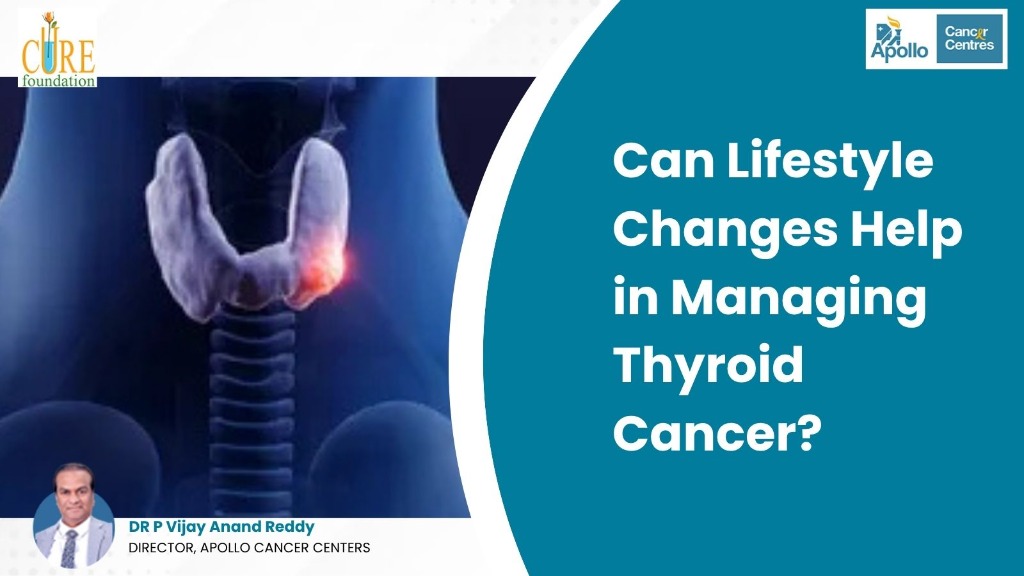
Can Lifestyle Changes Help in Managing Thyroid Cancer?
Dr. Vijay Anand Reddy
Consultant Oncologist • AI-Assisted Educational Resource
Medical Disclaimer: This article is AI-assisted and intended for general informational purposes only. It does not replace professional medical advice, diagnosis, or treatment. Please consult a qualified healthcare specialist for advice specific to your condition.
📌 Quick Summary: Lifestyle Changes & Thyroid Cancer Management
- Role of Lifestyle: While primary medical treatments (surgery, Radioactive Iodine, levothyroxine) are essential for cure, lifestyle changes serve as crucial supportive care to enhance energy, immunity, and treatment tolerance.
- Key Dietary Focus: Following an anti-inflammatory diet rich in antioxidants, managing iodine intake (including a strict Low-Iodine Diet before RAI therapy), and timing levothyroxine pills away from calcium/iron supplements.
- Physical & Mental Habits: Regular moderate physical activity, stress-reduction techniques (mindfulness/meditation), and 7–8 hours of quality sleep mitigate fatigue and support metabolic health.
- Expert Care: Always integrate lifestyle changes under the guidance of a senior clinical oncologist such as Dr. Vijay Anand Reddy.
Understanding Thyroid Cancer & The Role of Supportive Care
Thyroid cancer is a malignant condition in which abnormal cells form in the tissues of the thyroid gland, located at the base of the neck. While it is the most common endocrine malignancy with generally favorable prognosis when detected early, managing the disease requires a comprehensive approach. For clinical reference, explore the detailed overview of thyroid cancer.
A frequent question patients ask is: "Can lifestyle changes help in managing thyroid cancer?" Senior clinical oncologist Dr. Vijay Anand Reddy explains that while lifestyle modifications cannot replace primary medical interventions like surgery or radioiodine therapy, they play a vital role in optimizing metabolic health, accelerating surgical recovery, and improving overall quality of life.
Key Lifestyle Interventions for Thyroid Cancer Management
Adopting evidence-based lifestyle changes empowers patients during active treatment and long-term surveillance:
| Lifestyle Category | Scientific Rationale | Practical Action Steps |
|---|---|---|
| Nutrition & Diet | Combats oxidative stress, reduces systemic inflammation, supports thyroid hormone synthesis | Eat antioxidant-rich berries, leafy greens, lean proteins; follow a Low-Iodine Diet (LID) before RAI therapy |
| Hormone Timing | Ensures maximal absorption of replacement levothyroxine pills | Take levothyroxine on an empty stomach 30-60 mins before breakfast; separate from calcium/iron by 4 hours |
| Physical Activity | Reduces fatigue, maintains bone mineral density during TSH suppression therapy | 30 mins of moderate aerobic exercise (brisk walking, swimming, yoga) 5 days a week |
| Stress & Sleep | Lowers elevated cortisol levels, supports immune surveillance and tissue repair | Practice deep breathing, mindfulness meditation, ensure 7-8 hours of quality night sleep |
1. Nutrition & Targeted Dietary Habits
Dietary choices directly impact energy levels, digestive wellness, and immune resilience:
- Antioxidant-Rich Whole Foods: Incorporate colorful fruits, vegetables, nuts, and seeds rich in polyphenols and vitamins C and E to neutralize free radicals.
- Understanding the Low-Iodine Diet (LID): Prior to Radioactive Iodine (RAI) scanning or ablation therapy, patients must temporarily follow a strict Low-Iodine Diet (avoiding sea salt, dairy, seafood, and eggs) for 1–2 weeks to maximize RAI uptake by thyroid cells.
- Proper Levothyroxine Absorption: Patients who undergo total thyroidectomy require lifelong T4 replacement (levothyroxine). Taking this medication with plain water 30–60 minutes before food ensures optimal intestinal absorption.
2. Regular Physical Activity & Bone Health
Post-thyroidectomy patients often receive TSH suppression therapy (slightly elevated T4 doses to keep TSH low and prevent tumor recurrence). Over time, TSH suppression can affect bone density.
- Weight-Bearing Exercises: Walking, light resistance training, and gentle yoga help preserve bone mineral density and muscle mass while boosting daytime energy levels.
3. Stress Management & Mental Well-being
Cancer-related anxiety can disrupt sleep architecture and endocrine function. Mind-body practices such as mindfulness meditation, structured breathing exercises, and connecting with survivor support groups enhance emotional resilience and reduce psychological distress. Explore more on managing the psychological effects of cancer.
4. Avoiding Endocrine Disruptors & Tobacco
Minimizing exposure to environmental toxins—such as bisphenol-A (BPA), phthalates, synthetic pesticides, and avoiding tobacco and excess alcohol—supports hepatic detoxification pathways and reduces systemic chemical stress.
Integrating Lifestyle Changes with Medical Treatment
It is vital to understand that lifestyle modifications complement, but never replace, conventional medical treatments such as surgery, radioiodine therapy, or targeted medications. Always discuss dietary shifts, supplements, and exercise programs with your treating oncologist.
5 Essential Action Steps for Thyroid Cancer Patients
- Follow Precision Dietary Guidelines: Prioritize an anti-inflammatory diet rich in antioxidants, selenium, and zinc (found in leafy greens, berries, lean poultry, and nuts). When preparing for Radioactive Iodine (RAI) therapy, strictly adhere to a 1–2 week Low-Iodine Diet (LID) to maximize radioiodine absorption by residual thyroid cells.
- Master Levothyroxine Administration Timing: Take replacement thyroid hormone (levothyroxine) on an empty stomach with plain water at least 30 to 60 minutes before breakfast. Always space calcium, iron supplements, soy, and high-fiber foods at least 4 hours apart to prevent malabsorption.
- Engage in Regular Weight-Bearing Exercise: Incorporate 30 minutes of moderate physical activity—such as brisk walking, swimming, light weight training, or yoga—at least 5 days a week. Regular exercise combats treatment-related fatigue and helps preserve bone mineral density during long-term TSH suppression therapy.
- Prioritize Mind-Body Stress Reduction & Restorative Sleep: Practice mindfulness meditation, deep abdominal breathing, and maintain a consistent sleep schedule of 7 to 8 hours nightly. Lowering systemic cortisol levels supports immune function and endocrine stability.
- Minimize Exposure to Endocrine Disruptors: Reduce contact with environmental toxins, including bisphenol-A (BPA) in plastic containers, phthalates, synthetic pesticides, and avoid tobacco smoke and excessive alcohol consumption.
Expert Guidance & Multidisciplinary Support
Every thyroid cancer diagnosis is unique. Integrating lifestyle modifications into your daily routine should always be done in close coordination with your clinical oncology team. Senior clinical oncologist Dr. Vijay Anand Reddy, Director of Apollo Cancer Centres, provides world-class evaluation and comprehensive care plans tailored to individual patient needs. Combining advanced thyroid cancer treatments with personalized lifestyle support ensures optimal therapeutic success and long-term vitality.
Conclusion
Adopting evidence-based lifestyle modifications serves as a powerful cornerstone of holistic thyroid cancer care. While medical treatments—including total or partial thyroidectomy surgery, Radioactive Iodine (RAI) ablation therapy, and Levothyroxine TSH suppression therapy—remain the essential primary modalities for eradicating cancer, lifestyle changes optimize metabolic recovery, enhance immune surveillance, and significantly improve long-term quality of life.
By actively managing nutrition, physical activity, medication timing, and emotional well-being, patients can navigate their treatment journey with greater resilience, reduced fatigue, and improved overall health outcomes.
Frequently Asked Questions
Can lifestyle changes alone cure thyroid cancer?
No. Lifestyle changes cannot cure thyroid cancer on their own. Primary treatments like surgery (thyroidectomy), Radioactive Iodine (RAI) therapy, and TSH suppression hormone therapy are essential for cure. Lifestyle modifications serve as crucial supportive care to enhance immune resilience, reduce side effects, and optimize long-term health.
What is a Low-Iodine Diet (LID) and why is it necessary before Radioactive Iodine (RAI) therapy?
A Low-Iodine Diet restricts dietary iodine (avoiding iodized salt, dairy, seafood, and eggs) for 1 to 2 weeks prior to Radioactive Iodine (RAI) treatment. Depleting body iodine levels starves thyroid cells, forcing remaining cancer cells to absorb the radioactive iodine isotope far more effectively.
What foods are best for thyroid cancer patients post-surgery?
Post-surgery, patients benefit from nutrient-dense, anti-inflammatory foods rich in antioxidants, selenium, and zinc—such as berries, leafy green vegetables, lean poultry, nuts, and whole grains. If taking levothyroxine, calcium or iron-rich foods should be consumed at least 4 hours apart from your hormone tablet.
How does physical exercise help during thyroid cancer recovery?
Regular light-to-moderate exercise (walking, swimming, light strength training, or yoga) helps combat cancer-related fatigue, maintains healthy metabolic rate, preserves bone density (which can be affected by long-term TSH suppression therapy), and significantly reduces anxiety.
Why is Levothyroxine timing crucial with meals and supplements?
Levothyroxine (thyroid replacement hormone) must be taken on an empty stomach with plain water, ideally 30 to 60 minutes before breakfast. Dietary calcium, iron, soy, and high-fiber foods interfere with its gastrointestinal absorption, so they should be taken several hours later.
Does chronic emotional stress directly impact thyroid health?
Yes. Chronic stress increases cortisol levels and systemic inflammation, which can disrupt endocrine balance and suppress immune surveillance. Mindfulness meditation, deep breathing exercises, and adequate sleep support immune function and emotional resilience.
What environmental toxins should thyroid cancer patients avoid?
Patients should minimize exposure to endocrine-disrupting chemicals (EDCs), including bisphenol-A (BPA) in plastic food containers, phthalates in synthetic fragrances, pesticides, and unnecessary radiation exposure.
Where can patients get comprehensive thyroid cancer treatment in Hyderabad?
Comprehensive, multidisciplinary thyroid cancer treatment—including precision surgery, radioiodine therapy coordination, hormone management, and supportive care—is provided by leading clinical oncologist Dr. Vijay Anand Reddy at Apollo Cancer Centres in Hyderabad.
Dr. Vijay Anand Reddy
Dr. Vijay Anand Reddy is a renowned oncologist with over 34 years of experience in cancer treatment. He is committed to providing world-class cancer care and spreading awareness about early detection and prevention.
View Full ProfileRelated Articles
Discover more insights about cancer awareness, treatment options, and patient stories.

Does Oral Cancer Spread? {Quick Guide}

Can a Blood Test Detect Prostate Cancer?

Can Teenagers get Breast Cancer? {2026 Guide}

How Long Can You Live with Blood Cancer Without Treatment?

Is Chemotherapy Painful for Breast Cancer? {Real Facts}
