
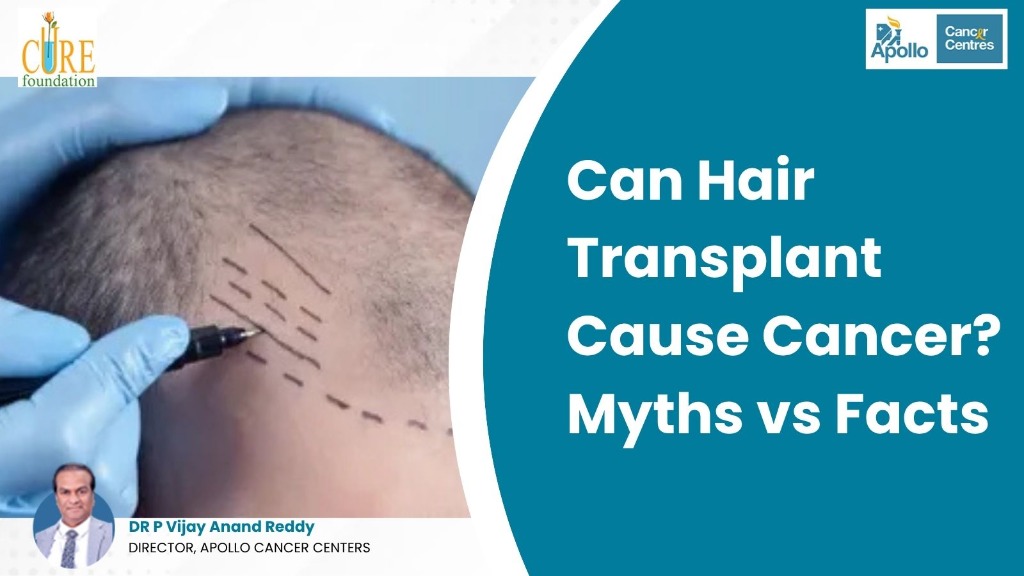
Can Hair Transplant Cause Cancer? {Myths vs Facts}
Dr. Vijay Anand Reddy
Consultant Oncologist • AI-Assisted Educational Resource
Medical Disclaimer: This article is AI-assisted and intended for general informational purposes only. It does not replace professional medical advice, diagnosis, or treatment. Please consult a qualified healthcare specialist for advice specific to your condition.
Quick Answer: Can a Hair Transplant Cause Cancer?
No, there is zero scientific or clinical evidence linking hair transplant procedures to cancer. A hair transplant involves autologous grafting—transferring your own healthy hair follicles from a donor region (typically the back or sides of the scalp) to areas experiencing hair thinning or baldness. Because the procedure utilizes your own biological tissue and involves no carcinogens, mutagens, or ionizing radiation, it cannot trigger malignant cell transformation or cause scalp, brain, or skin cancer.
Hair loss (androgenic alopecia) affects millions of men and women worldwide, impacting self-confidence, personal aesthetics, and psychological well-being. Modern hair restoration techniques—such as Follicular Unit Extraction (FUE) and Follicular Unit Transplantation (FUT)—have made natural hair regrowth accessible and highly effective. However, persistent online rumors and misinformation have caused some prospective patients to ask: Can undergoing a hair transplant cause cancer? Could scalp micro-incisions or local anesthetics trigger brain or skin tumors?
For individuals considering hair restoration, as well as cancer survivors seeking post-treatment hair rehabilitation, separating scientific facts from baseless myths is essential. In this comprehensive guide, senior clinical oncologist Dr. Vijay Anand Reddy examines the biological mechanisms of hair transplantation, debunks widespread cancer myths, details real vs. imaginary surgical risks, and offers medical guidance for safe restoration.
How Hair Transplantation Works: A Safe Autologous Procedure
To understand why hair transplants cannot cause cancer, it helps to understand the biology of hair transplantation. A hair transplant is a minor dermatological surgical procedure that reorganizes existing hair follicles from one part of the body to another.
There are two primary hair restoration techniques utilized in modern clinical practice:
- Follicular Unit Extraction (FUE): Individual hair follicle units (containing 1 to 4 hairs) are harvested directly from the donor zone using micro-punch equipment (0.7mm to 1.0mm) and implanted into tiny recipient micro-incisions on the balding area.
- Follicular Unit Transplantation (FUT / Strip Method): A narrow strip of scalp tissue containing healthy hair follicles is surgically removed from the donor region, dissected into microscopic grafts under magnification, and transplanted into recipient sites.
Both methods are strictly autologous—meaning the donor tissue belongs entirely to the patient. Because no foreign tissues, synthetic polymers, or immunosuppressive medications are introduced, there is no graft rejection, cellular incompatibility, or oncogenic transformation risk.
Debunking Common Myths: Hair Transplants vs. Cancer Risk
Despite clear medical consensus, several persistent myths continue to circulate online. Let us address and debunk these misconceptions with clinical facts:
Myth 1: Micro-Trauma from Scalp Incisions Triggers Skin Cancer
The Fact: Minor physical trauma or surgical incisions do not cause skin cancer. Skin cancers (such as basal cell carcinoma, squamous cell carcinoma, or melanoma) stem from direct ultraviolet (UV) radiation exposure from sunlight or inherited genetic mutations in epidermal cells. Surgical micro-slits created during FUE heal within days without altering cellular DNA or initiating malignant pathways.
Myth 2: Local Anesthetics Used During Surgery Cause Brain Tumors
The Fact: Local anesthetics (such as lidocaine or bupivacaine) used to numb the scalp act temporarily on local nerve endings to block pain signals. They are rapidly metabolized and eliminated by the liver and kidneys within hours. Local anesthetics do not cross into brain tissue, do not emit radiation, and carry zero mutagenic or brain tumor risks.
Myth 3: Post-Transplant Medications (Minoxidil / Finasteride) Cause Cancer
The Fact: Medications frequently prescribed to support hair growth post-surgery are thoroughly vetted. Minoxidil is a topical vasodilator that increases blood flow to hair follicles. Finasteride is an FDA-approved 5-alpha-reductase inhibitor that blocks dihydrotestosterone (DHT). Extensive clinical trials involving tens of thousands of men over decades show no increased risk of overall cancer from these medications.
Myth 4: Donor Hair Harvested from Others Can Cause Cancer
The Fact: Hair transplants only use the patient's own hair. Transplants from another human donor are not performed in clinical medicine because the immune system would immediately reject foreign tissue. Since you only receive your own tissue, there is zero risk of acquiring mutated cells from another person.
Side-by-Side Comparison: Myths vs. Clinical Facts
| Common Myth / Concern | Clinical & Biological Reality | Actual Medical Risk Level |
|---|---|---|
| Scalp incisions cause skin cancer | Physical micro-incisions heal naturally without DNA damage or oncogenic risk | Zero Cancer Risk |
| Local anesthesia causes brain tumors | Anesthetics act locally, do not enter brain tissue, and clear the body in hours | Zero Cancer Risk |
| Hair growth drugs cause cancer | FDA-approved agents (Minoxidil/Finasteride) have proven long-term safety profiles | Zero Cancer Risk |
| Grafting transfers foreign cancer cells | Transplants are strictly autologous; only your own hair follicles are used | Zero Cancer Risk |
| Scalp redness or swelling is a tumor sign | Post-op swelling and redness are temporary, normal inflammatory healing responses | Temporary Surgical Side Effect |
Real Surgical Risks vs. Imaginary Cancer Risks
While hair transplants do not cause cancer, like any minor surgical procedure, they carry legitimate, manageable surgical risks when performed by inexperienced technicians or unaccredited clinics. Understanding actual risks allows patients to make informed choices:
- Legitimate Surgical Risks: Minor bacterial infection, folliculitis (inflammation of hair follicles), temporary scalp numbness, mild swelling, itching, donor area scarring, and poor graft survival if improper technique is used.
- Imaginary Risks: Skin cancer, brain tumors, blood malignancies, lymphoma, organ toxicity, or immune system destruction.
Choosing a board-certified dermatologist or plastic surgeon operating in a sterile clinical facility virtually eliminates surgical complications and ensures natural aesthetic results.
Hair Transplants for Cancer Survivors: Is It Safe After Chemo or Radiation?
Many cancer survivors experience hair loss following systemic treatments. Understanding how oncology therapies affect hair helps clarify post-treatment restoration options:
- After Chemotherapy: Chemotherapy causes temporary alopecia by targeting rapidly dividing hair follicle cells. In over 95% of cases, natural hair regrowth begins spontaneously within 3 to 6 months after completing chemotherapy. A hair transplant is rarely needed unless permanent scarring alopecia occurs.
- After Radiation Therapy: Radiation therapy to the head or brain can permanently damage hair follicles within the direct radiation beam path if total radiation dose exceeds 45 to 50 Gray. For patients with permanent radiation-induced focal hair loss, a hair transplant can safely restore hair—provided the patient is fully in cancer remission and cleared by their treating oncologist.
- After Targeted Therapy: Modern targeted therapy agents may cause hair thinning, but normal growth typically resumes once treatment regimens finish.
Essential Post-Procedure Scalp Care & Sun Protection
Although a hair transplant does not cause skin cancer, protecting your scalp from environmental carcinogens—specifically solar UV radiation—is essential for overall skin health and graft survival:
- Avoid Direct Sunlight Exposure: Freshly transplanted hair grafts and healing scalp skin are sensitive to UV rays. Wear a loose-fitting protective hat when outdoors during the first 2 to 3 months.
- Apply Broad-Spectrum Sunscreen: Once scalp micro-incisions fully heal (typically 3 to 4 weeks post-op), apply broad-spectrum SPF 30+ sunscreen to bare scalp areas.
- Maintain Scalp Hygiene: Wash the scalp using mild, recommended shampoos to keep hair follicles clean and free of crusts or bacterial buildup.
Conclusion & Expert Medical Perspective
In conclusion, concerns that a hair transplant might cause cancer are entirely unfounded and unsupported by medical science. Hair transplantation is a safe, effective, autologous cosmetic procedure that carries zero risk of malignant transformation. If you are considering hair restoration or are a cancer survivor seeking post-treatment recovery guidance, consult experienced medical professionals. Under the clinical leadership of senior oncologist Dr. Vijay Anand Reddy, Director at Apollo Cancer Centres, Hyderabad, patients receive evidence-based care and comprehensive guidance for all oncology and recovery concerns.
Frequently Asked Questions
Can a hair transplant trigger scalp or skin cancer?
No. Hair transplants use your own biological tissue and involve minor surgical incisions that heal naturally. The procedure introduces no carcinogens or radiation and cannot trigger scalp or skin cancer.
Can local anesthesia used during a hair transplant cause a brain tumor?
No. Local anesthetics like lidocaine act temporarily on local scalp nerves and are metabolized by the body within hours. They do not cross into brain tissue and carry zero brain tumor risk.
Does hair loss medication (Minoxidil or Finasteride) cause cancer?
No. FDA-approved hair loss medications like Minoxidil and Finasteride have been extensively researched in clinical trials over decades and are proven safe when used under medical supervision.
Can cancer survivors get a hair transplant after chemotherapy or radiation?
Yes. After chemotherapy, hair usually regrows naturally. If permanent focal hair loss occurs due to high-dose radiation therapy, a hair transplant can be safely performed once the patient is in complete remission and cleared by their oncologist.
Is FUE or FUT hair transplant safer regarding cancer risk?
Both FUE (Follicular Unit Extraction) and FUT (Strip Method) carry zero cancer risk. Both techniques use your own hair follicles and operate strictly within the skin's dermal layers.
Can you get cancer from someone else's hair in a hair transplant?
No. Hair transplants only use your own hair follicles (autologous grafting). Hair from another person is never used because your immune system would immediately reject it.
What are the real medical risks of a hair transplant?
Real surgical risks include minor scalp infection, folliculitis, temporary swelling, donor area scarring, and poor graft survival. All real risks are manageable when performed by a qualified surgeon.
Where can I get expert advice on cancer care and post-treatment recovery in Hyderabad?
Comprehensive oncology consultations, radiation evaluations, and post-cancer recovery guidance are available under senior clinical oncologist Dr. Vijay Anand Reddy at Apollo Cancer Centres, Hyderabad.
Dr. Vijay Anand Reddy
Dr. Vijay Anand Reddy is a renowned oncologist with over 34 years of experience in cancer treatment. He is committed to providing world-class cancer care and spreading awareness about early detection and prevention.
View Full ProfileRelated Articles
Discover more insights about cancer awareness, treatment options, and patient stories.

Does Oral Cancer Spread? {Quick Guide}

Can a Blood Test Detect Prostate Cancer?

Can Teenagers get Breast Cancer? {2026 Guide}

How Long Can You Live with Blood Cancer Without Treatment?

Is Chemotherapy Painful for Breast Cancer? {Real Facts}
