
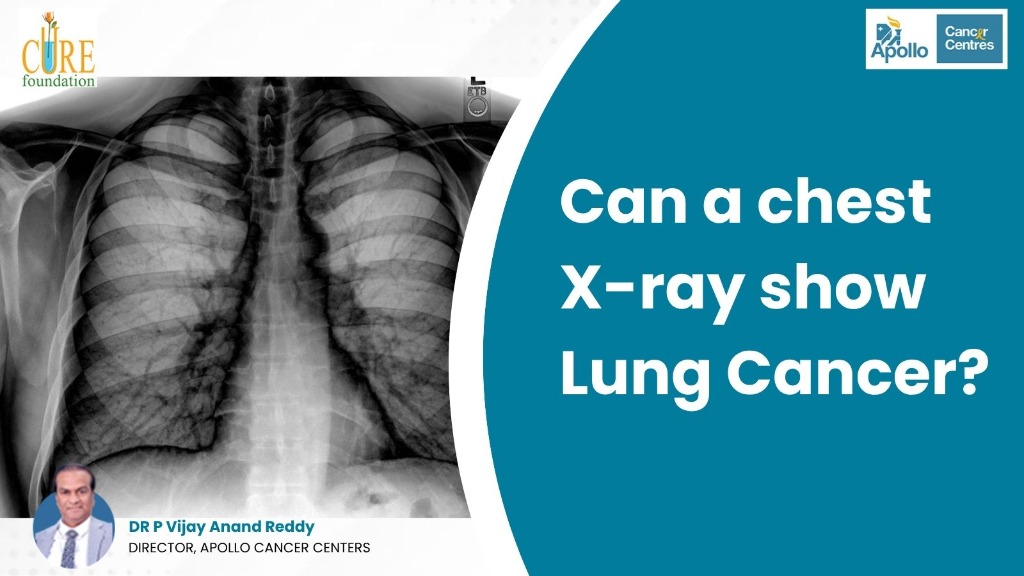
Can a chest X-ray show Lung Cancer?
Dr. Vijay Anand Reddy
Consultant Oncologist • AI-Assisted Educational Resource
Medical Disclaimer: This article is AI-assisted and intended for general informational purposes only. It does not replace professional medical advice, diagnosis, or treatment. Please consult a qualified healthcare specialist for advice specific to your condition.
Introduction
Yes, a standard chest X-ray can show signs of lung cancer, such as shadow-like spots, nodules, or abnormal masses within the lungs. However, a chest X-ray alone cannot confirm whether a shadow is cancerous. When experiencing persistent symptoms like an unexplained cough, shortness of breath, or chest discomfort, doctors often order a chest X-ray as the first step in diagnosis. Seeking guidance from a renowned Oncologist in India ensures suspicious findings are properly evaluated.
Lung cancer remains a common health condition globally, but catching it early improves treatment success. Understanding how imaging tools work empowers patients to make informed decisions. If you are wondering, can a chest X-ray show Lung Cancer, this guide explains how X-rays detect lung abnormalities, why early-stage cancers might be missed, and diagnostic options for Lung Cancer treatment in India.
Understanding Lung Cancer
Lung cancer develops when normal lung tissue cells undergo genetic mutations. These mutated cells grow uncontrollably, forming a tumor. As the tumor expands, it can disrupt breathing, block airways, and potentially invade surrounding tissues or spread to other organs.
Doctors divide lung cancer into two main biological categories based on microscopic appearance:
- Non-Small Cell Lung Cancer (NSCLC): The most common type, accounting for about 85% of cases. It includes adenocarcinoma, squamous cell carcinoma, and large cell carcinoma. Adenocarcinoma often starts in outer lung regions and is common in non-smokers. NSCLC generally grows and spreads slower than small cell varieties.
- Small Cell Lung Cancer (SCLC): Accounting for roughly 15% of cases, SCLC is an aggressive form strongly linked to heavy smoking. It typically begins in central airways, grows rapidly, and spreads early, requiring swift medical care.
Because lungs have many blood and lymph vessels, untreated cancer cells can spread to lymph nodes, brain, bones, or liver. Spotting lung changes early is essential to prevent cancer spread.
Symptoms of Lung Cancer
In early stages, lung cancer often develops silently without causing pain. As the tumor grows, warning signs appear. Recognizing these early signs helps prompt medical evaluation.
Key Symptoms to Watch For Include:
- A Persistent Cough: A new cough that lasts over two to three weeks or worsens over time.
- Coughing Up Blood: Mucus containing bright red blood or rust-colored streaks.
- Shortness of Breath: Feeling winded during routine tasks that previously caused no effort.
- Chest or Shoulder Pain: Persistent pain in the chest that worsens with deep breathing or coughing.
- Unexplained Weight Loss: Losing weight rapidly without changes in diet or exercise.
- Constant Fatigue: Feeling overwhelmed by exhaustion that does not improve with rest.
- Repeated Respiratory Infections: Frequent bronchitis or pneumonia that returns quickly after treatment.
- Hoarseness or Wheezing: Persistent voice changes or a whistling sound when breathing.
If you experience these symptoms for more than a few weeks, consulting a skilled Oncologist in India is vital.
Causes of Lung Cancer
Lung cancer occurs when cellular DNA in the lungs is damaged by carcinogens or genetic factors. While tobacco smoking is the leading cause, non-smokers can also develop the disease.
Primary Causes and Risk Factors:
- Tobacco Smoking: Smoking causes nearly 85% of lung cancer cases. Tobacco smoke contains carcinogens that damage airway linings and alter cellular DNA.
- Secondhand Smoke: Breathing smoke from others raises lung cancer risk for non-smokers.
- Radon Gas Exposure: Radon is an invisible, odorless gas from soil and rock. It builds up inside buildings and is the top cause of lung cancer in non-smokers.
- Workplace Chemical Hazards: Exposure to materials like asbestos, arsenic, chromium, nickel, and diesel exhaust damages lung tissue over time.
- Air Pollution: High levels of fine particulate matter (PM2.5) in cities contribute to cancer risk.
- Family History: Having a close relative with lung cancer increases your overall risk.
- Previous Radiation Therapy: Prior radiation treatment to the chest increases lung cancer risk later in life.
Can Chest X-Ray Show Lung Cancer
To answer the main question directly: can a chest X-ray show Lung Cancer? Yes, a chest X-ray can show lung cancer when a tumor is large enough or dense enough to create a shadow or spot on the image. However, an X-ray acts as an initial screening tool rather than a final confirmation.
When asking, will a chest xray show lung cancer, it helps to know how scans work. A chest X-ray uses low radiation to produce a 2D picture of your chest. Healthy, air-filled lungs let radiation pass through easily and appear dark. Bones absorb radiation and appear white, while soft tissues, fluid, and tumors appear as grey or white shapes.
If you wonder what does a chest xray show for lung cancer, radiologists check the picture for specific visual changes:
- Lung Nodules or Masses: A white or grey spot standing out against dark lung areas. Spots under 3 cm are nodules; larger spots are masses and have a higher chance of being cancerous.
- Pleural Effusion (Fluid Buildup): Fluid gathering around the lungs, appearing as a dense white zone at the bottom of the chest picture.
- Lung Collapse (Atelectasis): If a tumor blocks an airway, the lung segment beyond it loses air and collapses, creating a solid white area.
- Swollen Lymph Nodes: Enlargement in the central chest area, suggesting cancer cells may have reached nearby lymph nodes.
Although a chest xray show lung cancer signs in many cases, plain images cannot prove if a spot is a tumor, an old infection scar, or a benign cyst. Any suspicious finding on an X-ray requires detailed 3D scans and tissue tests.
Why Some Lung Cancers Go Undetected?
Chest X-rays are widely available and quick, but they have real physical limitations. In many cases, early-stage lung cancers can go undetected on a routine chest X-ray.
Main Reasons X-Rays May Miss Lung Cancer:
- Small Size: Very small tumors (under 1 cm) often do not cast a visible shadow on a 2D picture. In early Stage I cancer, spots are too small to see clearly.
- Overlapping Bones and Organs: A standard X-ray flattens 3D anatomy into one flat picture. Tumors hidden behind ribs, the heart, or the diaphragm can easily be missed.
- Faint "Ground-Glass" Lesions: Early adenocarcinomas often appear as faint, hazy patches rather than solid lumps, blending into normal lung tissue.
- Airway Lining Tumors: Lesions growing flat along the inside of bronchial tubes may not form an outer bulge, making them invisible on plain radiographs.
Because of these limits, a normal X-ray does not rule out lung cancer if your symptoms continue. Persistent warning signs require more detailed testing.
Proven Techniques for Lung Cancer Screening
When an X-ray shows a suspicious shadow, or when high-risk individuals need preventative screening, doctors use advanced diagnostic tests that provide 3D images and tissue samples.
- Low-Dose CT (LDCT) Scan: LDCT is the gold standard for lung cancer screening in high-risk individuals. It uses low radiation to take detailed 3D pictures of the lungs, catching tiny spots years before an X-ray can.
- High-Resolution CT Scan: A contrast-enhanced CT scan provides clear views from multiple angles, measuring the exact size, shape, and borders of a lung spot.
- PET-CT Scan: A PET scan uses a tiny amount of sugar tracer to highlight active cancer cells, helping differentiate tumors from scars and checking for cancer spread.
- Bronchoscopy & EBUS: A thin scope with a camera checks the airways. Endobronchial ultrasound (EBUS) lets doctors view lymph nodes and take precise tissue samples.
- Needle Biopsy: A fine needle is guided by CT imaging into a lung spot to remove cells for lab analysis. A biopsy is the only test that confirms cancer.
Treatment Methods for Lung Cancer
Lung cancer treatments have advanced significantly in recent years. Modern treatment plans are tailored based on the cancer type, stage, genetic markers, and overall patient health. Seeking Lung Cancer treatment in India gives patients access to high-standard medical oncology, precision radiation, and expert surgery.
Main Treatment Options Include:
- Surgery: For early-stage cancer, surgical removal offers the best chance of a cure. Surgeons may remove a lung section (segmentectomy), an entire lobe (lobectomy), or a whole lung (pneumonectomy).
- Radiation Therapy: Focused energy beams destroy cancer cells. Modern methods like SBRT and IMRT deliver precise radiation to tumors while protecting healthy tissue.
- Chemotherapy: Anti-cancer drugs travel through the blood to kill fast-growing cancer cells, used before or after surgery or for advanced cases.
- Targeted Therapy: Drugs designed for tumors with specific gene mutations (like EGFR or ALK) block cancer growth signals with fewer side effects than chemotherapy.
- Immunotherapy: Medicines that boost your immune system so it can recognize and fight lung cancer cells effectively.
Consulting a top Oncologist in India like Dr. Vijay Anand Reddy ensures you receive a personalized care plan for the best results.
Conclusion
In summary, when asking can a chest X-ray show Lung Cancer, the answer is yes—X-rays are helpful first-step tools that can spot visible lung masses, nodules, or fluid. However, plain X-rays cannot detect very small early spots or prove if a spot is cancerous.
If you have a history of smoking or persistent symptoms like a long cough or breathlessness, do not rely on a normal X-ray alone. Advanced screening like Low-Dose CT scans is essential for early detection. Consulting an experienced specialist like Dr. Vijay Anand Reddy provides access to reliable screening and effective Lung Cancer treatment in India.
Frequently Asked Questions (FAQ):
Frequently Asked Questions
Can a chest X-ray show Lung Cancer?
Will a chest xray show lung cancer in its early stages?
What does a chest xray show for lung cancer when a tumor is present?
Can a chest X-ray miss lung cancer completely?
What is the best screening test for lung cancer?
What happens if a chest X-ray shows a spot on my lungs?
Dr. Vijay Anand Reddy
Dr. Vijay Anand Reddy is a renowned oncologist with over 34 years of experience in cancer treatment. He is committed to providing world-class cancer care and spreading awareness about early detection and prevention.
View Full ProfileRelated Articles
Discover more insights about cancer awareness, treatment options, and patient stories.

Does Oral Cancer Spread? {Quick Guide}

Can a Blood Test Detect Prostate Cancer?

Can Teenagers get Breast Cancer? {2026 Guide}

How Long Can You Live with Blood Cancer Without Treatment?

Is Chemotherapy Painful for Breast Cancer? {Real Facts}
