How does IMRT radiation work? {Quick Guide}
Dr. Vijay Anand Reddy
Consultant Oncologist • AI-Assisted Educational Resource
Medical Disclaimer: This article is AI-assisted and intended for general informational purposes only. It does not replace professional medical advice, diagnosis, or treatment. Please consult a qualified healthcare specialist for advice specific to your condition.
Quick Summary: How Does IMRT Radiation Work?
IMRT (Intensity-Modulated Radiation Therapy) is an advanced, computer-guided external beam radiation technique that delivers high-energy photon or proton beams precisely shaped to the 3D contour of a tumor. Using computer-controlled multi-leaf collimators (MLCs), the machine divides radiation beams into thousands of tiny "beamlets," dynamically varying their intensity. This allows radiation oncologists to deliver lethal radiation doses directly to cancer cells while keeping radiation to surrounding healthy organs at safe, minimal levels.
Introduction: The Evolution of Radiation Oncology
Radiation therapy has long served as a vital cornerstone in cancer treatment, curing or controlling tumors in more than half of all cancer patients worldwide. However, the fundamental challenge of traditional radiotherapy has always been precision: how to deliver a dose powerful enough to destroy malignant tumors without damaging adjacent healthy organs and critical nerves.
In older radiation methods, beams were delivered in uniform rectangular shapes. Because tumors rarely have regular shapes and often wrap around delicate structures like the spinal cord, brainstem, optic apparatus, or salivary glands, older treatments often forced compromises between tumor control and normal tissue safety.
Intensity-Modulated Radiation Therapy (IMRT) resolved this historical challenge. By combining advanced 3D diagnostic imaging, inverse computer optimization algorithms, and motorized beam-shaping leaves, IMRT revolutionized oncology by sculpting radiation doses with millimeter precision.
If you or a loved one is preparing for treatment, understanding how does IMRT radiation work provides clarity and confidence. In this comprehensive guide, we explore the core technology, step-by-step treatment journey, clinical advantages, and expert insights from leading Oncologist in Hyderabad Dr. Vijay Anand Reddy, Director of Apollo Cancer Centres.
Seeking Advanced Precision Radiation Therapy in India?
Consult Dr. Vijay Anand Reddy at Apollo Cancer Centres, Hyderabad, for world-class IMRT, stereotactic radiotherapy, and personalized cancer treatment protocols.
Schedule an Expert Consultation →The Core Science: How Does IMRT Radiation Work?
At its core, intensity modulated radiation therapy uses high-energy photon beams generated by a medical machine called a Linear Accelerator (Linac). What makes IMRT uniquely powerful compared to earlier techniques is its ability to break each radiation beam into hundreds of tiny sub-beams called beamlets, and dynamically adjust the radiation intensity of each beamlet during delivery.
This technological breakthrough relies on three primary engineering and physics principles:
1. Multileaf Collimators (MLCs)
Inside the linear accelerator head, a multileaf collimator containing up to 120 pairs of computer-driven, ultra-thin tungsten leaves moves continuously. As the gantry rotates around the patient, these metal leaves slide back and forth in fractions of a second, continually reshaping the beam aperture to match the tumor's geometric profile from multiple angles.
2. Inverse Treatment Planning
Rather than manual trial-and-error forward planning, IMRT utilizes inverse treatment planning. The radiation oncologist enters precise clinical goals into high-speed computers: defining the exact curative dose required for the tumor while establishing strict maximum tolerance limits for neighboring healthy organs (Organs at Risk, or OARs). Optimization algorithms run thousands of calculations to determine the exact beam angles, leaf patterns, and beamlet fluences necessary to satisfy these criteria.
3. Dose Sculpting and Organ Sparing
By modulating intensities across multiple beamlets, IMRT creates concave radiation curves that bend around sensitive anatomy. In head and neck cases, for instance, it treats tumor-bearing lymph nodes with high doses while creating a protective radiation shadow over salivary glands and the spinal cord. Clinical principles of Intensity-Modulated Radiation Therapy demonstrate how this technology curtails complications like xerostomia, swallowing difficulties, and tissue fibrosis.
The Step-by-Step IMRT Radiation Therapy Process
The imrt radiation therapy process is a comprehensive clinical pathway carried out by a coordinated team of radiation oncologists, medical physicists, dosimetrists, and radiation technologists:
Immobilization and 3D Simulation CT Scan
To guarantee reproducible precision every day, custom immobilization devices—such as a mesh thermoplastic mask for head/neck tumors or a contoured vacuum cradle for pelvic treatments—are molded to the patient. A high-resolution simulation CT scan is performed in this exact posture to record 3D tumor coordinates.
Target Delineation & Contouring
The radiation oncologist reviews the simulation CT, often fusing it with diagnostic MRI or PET-CT scans. The doctor meticulously contours the gross tumor volume (GTV), microscopic extension zones (CTV), and margin expansion (PTV), while tracing every critical normal organ nearby.
Computer Optimization & Dosimetry
Medical physicists and dosimetrists execute inverse planning software. Advanced algorithms optimize beam angles, leaf trajectories, and intensity levels, generating Dose-Volume Histograms (DVHs) to ensure uniform tumor coverage and minimal normal organ radiation.
Physics Verification & Quality Assurance (QA)
Before patient delivery begins, the treatment plan is run on specialized phantom measurement devices in the linear accelerator. Physicists independently verify that the physical radiation dose delivered matches the computer calculation within sub-millimeter tolerances.
Daily Delivery with Image Guidance (IGRT)
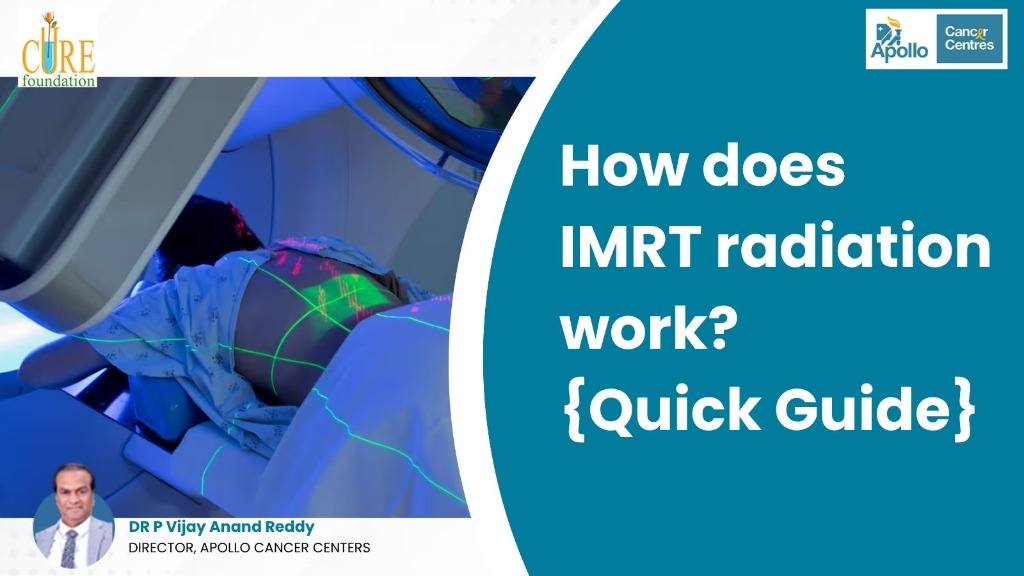
Before each daily fraction, on-board digital X-rays or cone-beam CT align the patient precisely with the planning baseline. The linear accelerator rotates smoothly, delivering the beam quietly, painlessly, and non-invasively while the patient rests comfortably.
IMRT vs 3D-CRT: What is the Difference?
Patients often ask about imrt vs 3d crt radiation therapy and which modality is best suited for their cancer diagnosis. Both are forms of external beam radiotherapy, but their targeting sophistication differs substantially:
| Feature | 3D-CRT (Conformal Radiotherapy) | IMRT (Intensity-Modulated Radiotherapy) |
|---|---|---|
| Beam Intensity | Uniform intensity across each treatment beam. | Modulated intensity; divided into hundreds of sub-beamlets. |
| Target Shaping | Matches general 3D shape, but cannot curve around organs. | Concave dose sculpting; curves tightly around normal organs. |
| Planning Method | Forward planning (manual beam adjustment). | Inverse planning (computer-optimized dose objectives). |
| Organ-at-Risk Sparing | Moderate; nearby tissues receive higher incidental dose. | Superior; significantly reduces dose to critical structures. |
| Common Uses | Simple tumor anatomies, palliative treatments. | Complex tumors: head & neck, brain, prostate, pelvis. |
While 3D-Conformal Radiotherapy is effective for straightforward tumor anatomies, IMRT is strongly favored when cancer borders delicate anatomical structures. In select specialized cases, advanced treatments like Stereotactic Radiotherapy, Tomotherapy, or Proton Therapy may also be evaluated.
Cancers Commonly Treated with IMRT
Because of its exceptional dose conformity, an IMRT Specialist in India utilizes this technique across a broad range of challenging malignancies:
- Head and Neck Cancers: Oral cavity, nasopharynx, larynx, and tonsil tumors. IMRT spares salivary glands, preventing lifelong dry mouth (xerostomia), and shields the spinal cord, jawbone, and swallowing structures.
- Prostate Cancer: Delivers curative radiation doses directly to the prostate gland while strictly sparing the rectum and bladder wall, dramatically reducing bowel and urinary complications.
- Brain and Central Nervous System Tumors: Targets glioblastomas, astrocytomas, and meningiomas while sparing critical healthy brain tissue, optic pathways, and the brainstem, while addressing common patient concerns regarding cranial radiation and hair loss recovery.
- Breast Cancer: Ensures uniform dose distribution throughout breast tissue while safeguarding the heart (especially for left-sided tumors) and the lungs from unnecessary radiation exposure.
- Gynecological & Pelvic Cancers: Cervical, uterine, and anal cancers, protecting the small intestine, bladder, kidneys, and femoral heads.
Consult India's Pioneer in Radiation Oncology
With over three decades of clinical excellence, Dr. Vijay Anand Reddy offers cutting-edge radiation oncology, compassionate care, and personalized cancer treatments.
Book an Appointment →Key Benefits and Potential Side Effects of IMRT
Understanding imrt side effects and benefits empowers patients to prepare with confidence:
Major Clinical Benefits
- Higher Tumor Control Rates: Clinicians can safely escalate radiation dose to the tumor without exceeding normal organ thresholds.
- Reduced Radiation Toxicity: Healthy tissues receive minimal collateral radiation, lowering both acute side effects during treatment and chronic long-term complications.
- Preserved Organ Function: Patients retain better swallowing, speech, urinary continence, and sexual function.
- Completely Non-Invasive & Outpatient: Treatments require no surgical incisions, no anesthesia (except for young children), and no hospital stay.
Potential Side Effects & Management
While IMRT dramatically minimizes collateral damage, radiation interactions still trigger temporary biological responses:
- Fatigue: A common, gradual tiredness as the body uses cellular energy to repair healthy tissues.
- Mild Skin Irritation: Slight redness, dryness, or peeling in the treatment area, resembling a mild sunburn.
- Site-Specific Reactions: Temporary mouth soreness in head/neck cases or mild urinary frequency in prostate treatments.
These reactions are generally temporary, peaking toward the end of treatment and resolving within several weeks post-therapy under proactive supportive care.
How Long Does IMRT Treatment Take? (Timeline & Schedule)
A frequent concern among patients is how long does imrt treatment take both on a daily basis and across the entire treatment calendar:
Daily Session Duration
A typical daily visit takes approximately 15 to 30 minutes in total. Most of this time is spent carefully positioning the patient and performing image verification scans. The actual beam delivery itself lasts only 5 to 10 minutes.
Total Treatment Course
IMRT is typically delivered in daily "fractions," 5 days a week (Monday through Friday) over 5 to 7 weeks (typically 25 to 35 fractions). Spreading radiation over weeks gives healthy cells time to repair between daily sessions.
Because IMRT is performed on an outpatient basis and causes no post-treatment drowsiness, most patients comfortably continue their day-to-day work and family routines throughout therapy. In addition, IMRT is recognized by insurance providers and frequently reimbursed under comprehensive cancer health insurance policies.
Final Thoughts: Precision Technology in Skilled Hands
Intensity-Modulated Radiation Therapy represents one of the greatest technological achievements in modern cancer care. By enabling clinicians to sculpt high-dose radiation around complex anatomical targets, IMRT maximizes cancer cure rates while protecting vital bodily functions and daily quality of life.
However, the success of IMRT depends heavily on the expertise behind the machine. The clinical discernment of the radiation oncologist, the precision of medical physicists, and state-of-the-art linear accelerators are what translate sophisticated technology into life-saving clinical outcomes.
If you or a loved one requires precision radiation therapy, consult leading Oncologist in Hyderabad and recognized IMRT Specialist in India Dr. Vijay Anand Reddy at Apollo Cancer Centres for personalized, compassionate, and world-class cancer treatment.
Frequently Asked Questions
Is IMRT radiation therapy painful?
How does IMRT differ from conventional radiation therapy?
Does IMRT make the patient radioactive?
What is the duration of a daily IMRT radiation session?
What are the common side effects of IMRT?
Can IMRT be combined with chemotherapy?
How many weeks does an IMRT treatment course typically last?
Whom should I consult for IMRT radiation treatment in India?
Dr. Vijay Anand Reddy
Dr. Vijay Anand Reddy is a renowned oncologist with over 34 years of experience in cancer treatment. He is committed to providing world-class cancer care and spreading awareness about early detection and prevention.
View Full ProfileRelated Articles
Discover more insights about cancer awareness, treatment options, and patient stories.

How does IMRT radiation work? {Quick Guide}

Is Immunotherapy Covered by Insurance?

Is an Itchy Neck a Sign of Cancer? {In 2026}
Can Bladder Cancer cause Kidney failure?
Can MRI detect Esophageal Cancer?